In shortYes, as long as you know what you are going to. Xochimilco is a working wetland 28 km south of central Mexico City, roughly 184 km of canals running between hand-built chinampas, listed by UNESCO on 11 December 1987. The water is opaque and the big docks are loud on Sunday afternoons. Go midweek in the morning, or take a route through the protected zone, or go with a guided small group.
184 kmnavigable canals
11 December 1987UNESCO inscription
2,657 hectaresprotected wetland
17barrios in the centre
Xochimilco is worth visiting, with two conditions
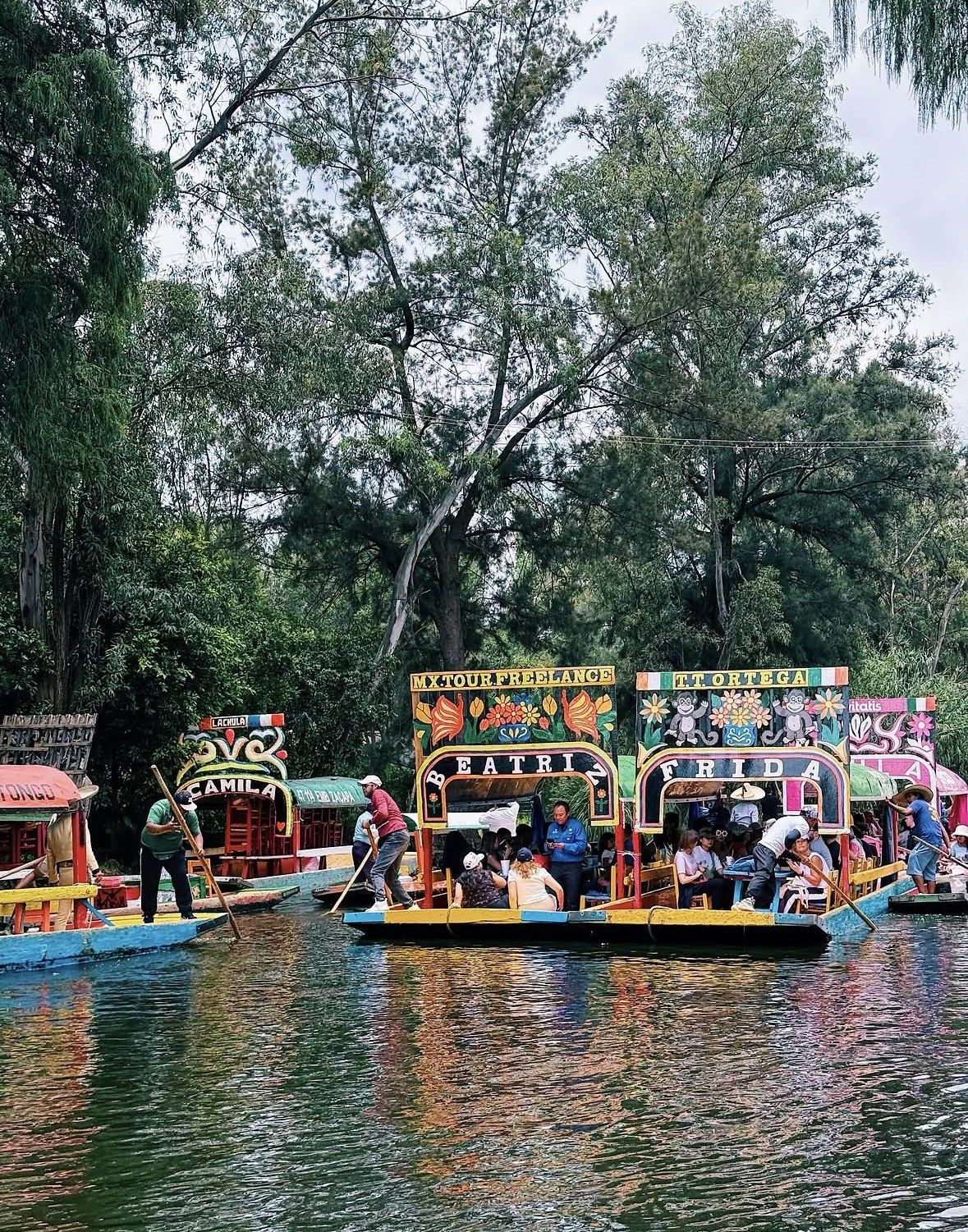
Go. Two decisions do most of the work: the day of the week you are on the water, and the route you take. Get both right and this is one of the better days anyone has in Mexico City. Get them wrong and you spend an afternoon in a queue of painted boats with somebody else's sound system two metres away.
The thing itself is a cultural landscape that still functions. Roughly 184 km of navigable channels run between chinampas, the hand-raised plots the borough dates to roughly the 14th to 16th centuries, and what grows on them still reaches kitchens in the borough. Around the plots lies a protected wetland of 2,657 hectares, where the conservation work is organised around the axolotl.
The complaints hold up as well. On a weekend afternoon the busiest landings are loud and commercial, the water is opaque, and boats selling food, music and photographs pull alongside the whole way. Turn up expecting a clear lagoon and quiet, and you will leave unhappy.
What the canals actually give you
The case for going rests on things you can check.
- The listing is documented and dated: UNESCO inscribed the canals on 11 December 1987 under criterion (v), as a cultural site held in the same entry as Mexico City's historic centre, property ID 412.
- Scale: about 184 km of waterways lined with chinampas, so no single route covers much of the system.
- The plots are still planted, and the borough's cuisine uses what they produce.
- A protected wetland of 26.57 km2 across the Xochimilco and San Gregorio Atlapulco lake system, with the axolotl as the species the conservation work is built around.
- Birds: the launches at Fernando Celada, Cuemanco and Puente de Urrutia send their routes through the protected natural zone, where migratory and endemic species can be spotted.
- Food and music that arrive by water on the traditional routes, with the operators' own systems the only sound equipment allowed aboard.
- A town as well as a dock: 17 original barrios around the central plaza, plus fourteen original villages inside the UNESCO-protected area.
- The church and former monastery of San Bernardino de Siena, begun in 1535 with building phases running until 1600, holding a 16th-century Plateresque retablo whose only comparable survivor is at Huejotzingo in Puebla; the Jardín Juárez occupies the old atrium, 0.07 km from the Plaza Central.
Is Xochimilco a tourist trap?
Not in the way people mean it. Trajinera hire is priced per boat per hour, the Alcaldía Xochimilco sets that rate and publishes it on its official site, and the city's tourism portal states that the fare is fixed. The same rate applies to the standard tourist route and to the ecological route through the protected canals, and the smaller six to eight passenger boats are charged what the large trajineras are. That part of a visit here is decided before anyone arrives.
What does feel like a trap is everything the rate leaves out. Ten authorised landings work every day of the year, each with its own fleet and its own routes, and not all of them publish hours. Mariachi boats, food boats and photographers pull alongside mid-ride, and no official tariff covers any of them. The bad stories come from standing at the water's edge working out which route, how long, and what costs extra.
Booking settles all of that in advance. The route, the length and the boat are fixed before you arrive, and each tour on this site sets out what is included and what is not.
Why some visitors leave disappointed
Crowding is a question of which dock you use. About 220 boats are based at Nuevo Nativitas and about 215 at Caltongo, both running traditional routes, and on a Sunday afternoon you will share the same channels with a good number of them. Salitre sits at the other end of the scale, open since 1921 with about 51 boats.
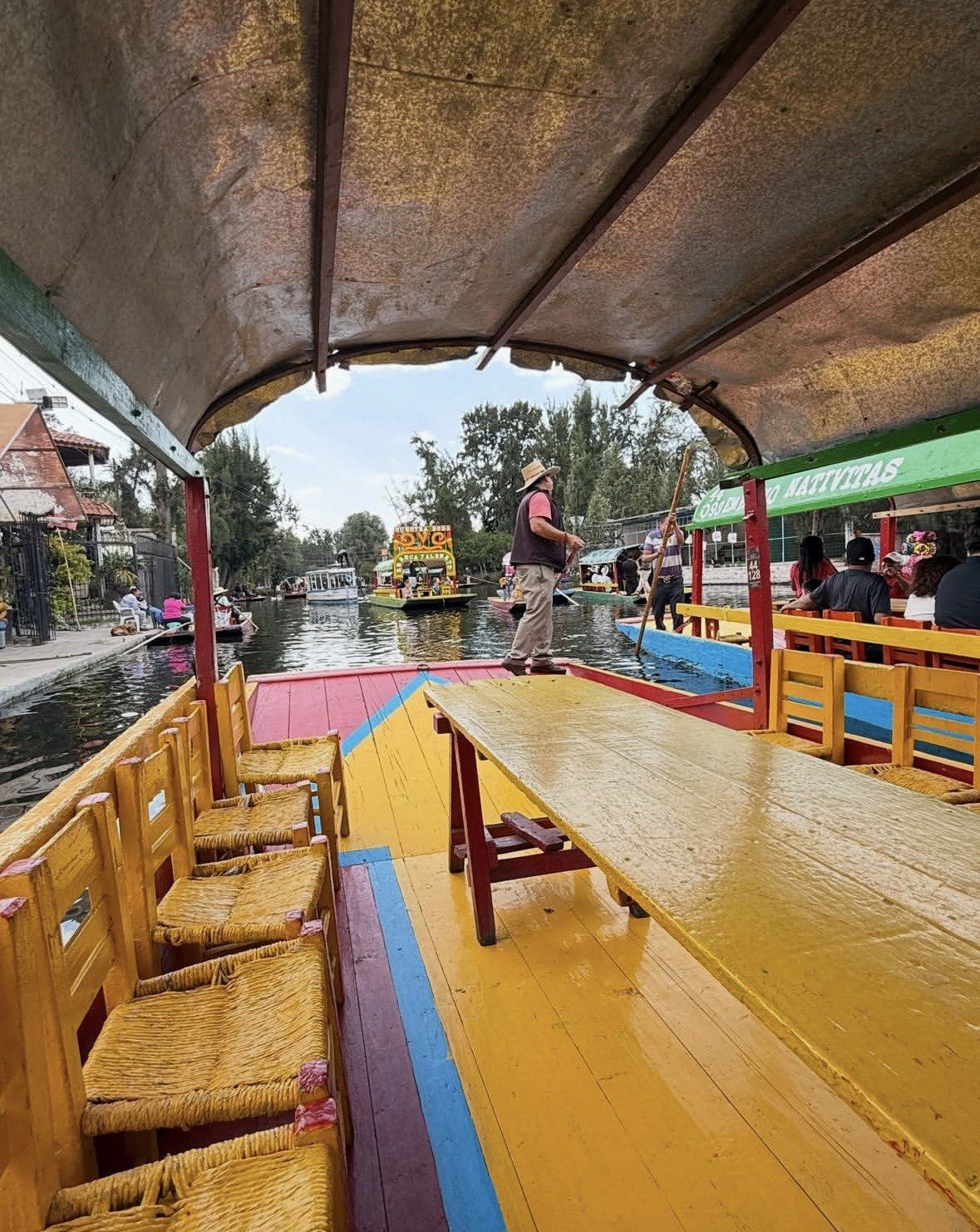
The water is shallow, opaque and green-brown, because this is farmed wetland. Nobody swims. The canal rules keep passengers seated with hands and feet inside the boat, and stepping or jumping across to another boat is forbidden.
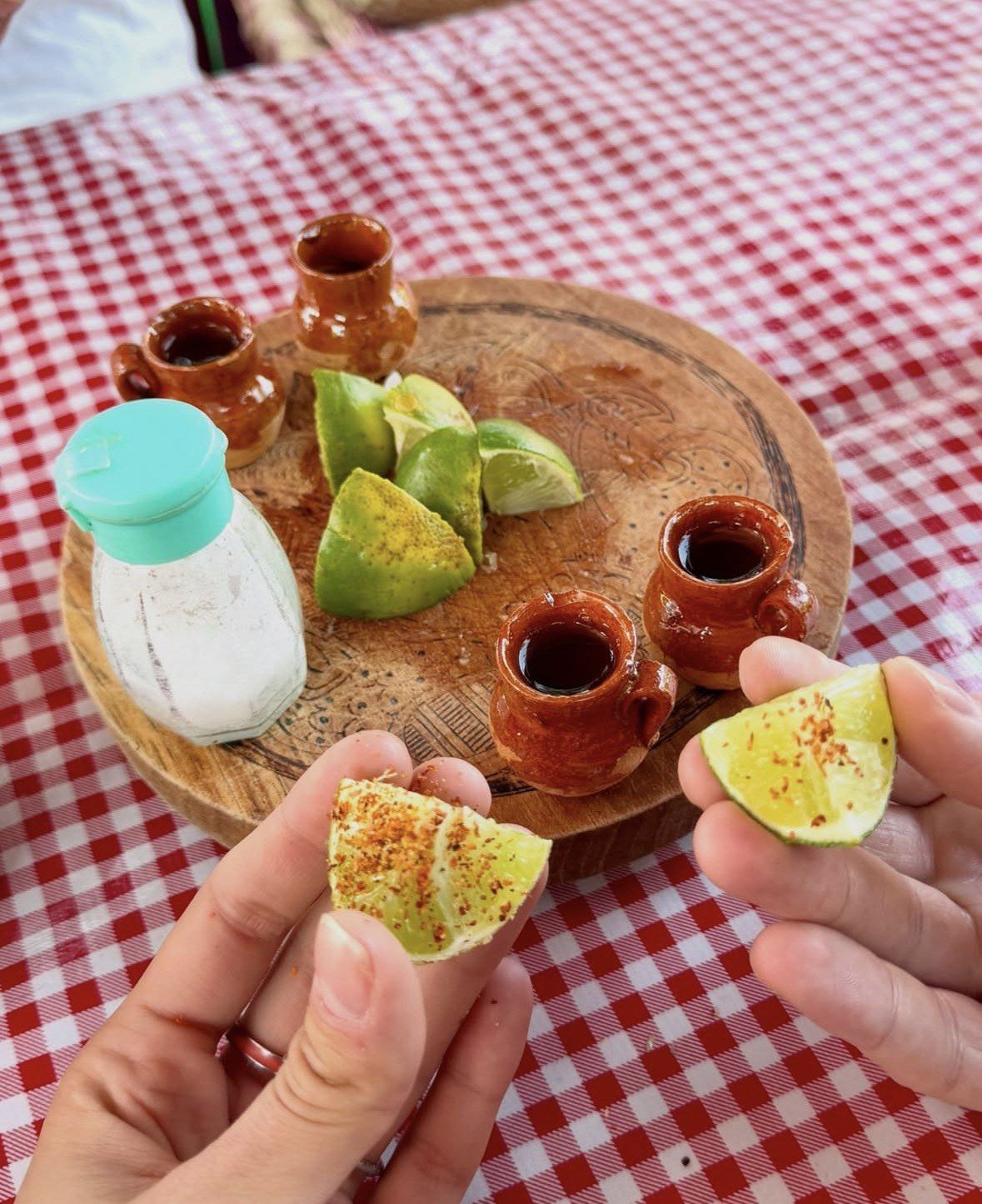
Quiet is not part of the traditional route. The published limits shape the mood as much as the crowd does: spirits are allowed at one bottle per boat, beer at three per adult, the only sound system aboard is the operator's, so your own speaker stays at the hotel, toilet breaks happen at authorised stops rather than when you want one, and whatever you open travels with you until the operator points you to disposal. On the Nativitas side a boat carrying up to 18 passengers with music is ordinary, and that ceiling is enforced, with children under four counted in it.
Daylight runs out long before the landings close. Nothing lights the channels, so the usable hours on the water end around 17:00 whatever time a dock shuts, and the sensible order is to be aboard before mid-afternoon.
First light, before the fleets
If noise and crowds are what is holding you back, this 5-hour sunrise trip puts you on the water before the fleets leave, from 480 pesos, 4.6 ★ (95 reviews).
★ 4.6/5 · 95 reviews
How to get the version you actually want
Three changes fix most of the problem: go midweek, start early, and pick a route built around the protected zone or the food rather than the party.
- Midweek and early. Nuevo Nativitas is listed open daily from 6:00, and Fernando Celada from 8 a.m. to 6 p.m. Monday to Friday. Only three landings publish official hours, so check on the day.
- Sunrise. The channels are quietest and the birds busiest before the fleets move. Sunrise Kayak Tour in Xochimilco runs 5 hours, from 480 pesos, 4.6 ★ (95 reviews); the kayak, vest, individual paddle and traveller insurance come with it, while breakfast and round-trip transport in an air-conditioned vehicle are options you select. You meet in front of the yellow church, where the staff wear blue and pink vests.
- Protected-zone water. The routes leaving Fernando Celada, Cuemanco and Puente de Urrutia cross the natural zone, and for the longest version of that, the ecological run from Belem takes four to five hours and covers the Xaltocán and Caltongo lagoons.
- Food and farming. Guacamole a Tasty Adventure Through Xochimilco Markets and Canals lasts 3.5 hours, from 1,900 pesos, 5.0 ★ (12 reviews). It starts with coffee or tea and either sweet bread or a tamal, a bicitaxi carries you from the markets down to the pier, there is a stop at a traditional chinampa with an axolotl sanctuary, and the ingredients for a taco placero plus hibiscus flower water travel with you on the boat.
- A guide and no logistics to handle. PREMIUM Frida Kahlo Museum and Xochimilco (Small Groups) fills 6-7 hours, from $56, 4.9 ★ (1352 reviews). A certified tour guide stays with the group, private transportation collects you at your hotel and returns you there, Coyoacán is covered on foot, the trajinera ride comes with a music speaker on the trajinera and a mariachi song, a Mexican churro is handed out along the way, and the Frida Kahlo Museum entrance applies when that option is selected. Gratuities are not included.
Choosing between the three styles
Match the trip to whatever was putting you off. Noise and crowds point to dawn. Curiosity about the farming points to the markets route. One day covering the canals and Coyoacán points to the small group.
From June onward the afternoons are the weak spot: the alcaldía's bulletin on reinforcing measures for the rains carries the date 3 June, and storms in those months tend to arrive late in the day. A morning start keeps you clear of that and of the weekend fleets.
| Tour | Duration | From | Rating | On the water | Best for |
|---|
| PREMIUM Frida Kahlo Museum and Xochimilco (Small Groups) | 6-7 hours | from $56 | 4.9 ★ (1352 reviews) | Trajinera | A first visit with a certified guide, hotel pick-up and Coyoacán on the same day |
|---|
| Guacamole a Tasty Adventure Through Xochimilco Markets and Canals | 3.5 hours | from 1,900 pesos | 5.0 ★ (12 reviews) | Canal boat after the markets | Walking on a chinampa and eating what the plots grow |
|---|
| Sunrise Kayak Tour in Xochimilco | 5 hours | from 480 pesos | 4.6 ★ (95 reviews) | Kayak | Quiet channels at first light, with your own paddle and vest |
|---|
Questions people ask
How much time does Xochimilco need?
Budget for the distance as well as the boat, since the canals sit some 28 km south of the city centre. The guided options on this site run 3.5 hours for the markets and canals route, 5 hours for the sunrise kayak, and 6-7 hours for the small-group day with Coyoacán. Daylight sets the limit on the water, because boats generally work between about 8:00 and 17:00.
Can I bring young children on a trajinera?
Yes, with the rules in mind. The limit of 18 passengers per boat is strictly enforced and counts children under four, passengers may not move to another boat during the ride, and everyone stays seated with hands and feet inside. Toilets may be used only at authorised stops, which is worth knowing before a long route. If someone in your party would rather not wear a life jacket, a release has to be signed with the operator or authorised staff.
Will I see axolotls?
The axolotl, the amphibian emblematic of Mexico City, is the species the conservation work in the protected area is built around, and the habitat for it lies inside the Parque Ecológico de Xochimilco, some 165 hectares of canals and chinampas at Periférico Oriente #1, Col. Ciénega Grande. On the water, the markets and canals trip stops at a traditional chinampa with an axolotl sanctuary. Do not count on spotting one in open canal water.
Is there a month to avoid?
No month is shut, since the ten authorised landings operate 365 days a year. What moves is the weather: the alcaldía dated its bulletin on reinforcing measures for the rains 3 June, so from then on the afternoons carry the risk. A festival week shifts the mood of the borough rather than closing it. Santiago Tulyehualco has held the Feria de la Alegría y el Olivo in Plaza Quirino Mendoza each February since 1971, and the alcaldía's bulletins put the Feria de la Flor Más Bella del Ejido at 7 to 13 April.
Read also