In shortThings to do in Xochimilco split between water and land. On the water: the classic trajinera ride with music and food boats, ecological routes through the protected canals, dawn paddling, the Isla de las Muñecas and chinampa landings. On land: 17 original barrios, the church of San Bernardino de Siena, the Mercado de Xochimilco, the Cuemanco plant market, the ecological park and the Museo Dolores Olmedo in La Noria.
184 kmnavigable canal network
17original barrios in the centre
2,657 hectaresprotected wetland
165 hectaresParque Ecológico de Xochimilco
Things to do in Xochimilco on the water
There is more than one boat trip here. Roughly 184 km of navigable water threads between the chinampas, the hand-built farming plots the borough dates to the 14th, 15th and 16th centuries, and the landing you leave from decides which stretch of that network you see. Traditional routes stay on the busy water with the music and food boats; the protected zone is a slower run with birds in it.
No lighting runs along the channels, which keeps traffic to daylight hours. Treat morning to late afternoon as the usable window and be aboard well before mid-afternoon. All ten authorised embarcaderos, the landing stages, work 365 days a year, so what you actually decide is the hour, the route and how long you stay out.
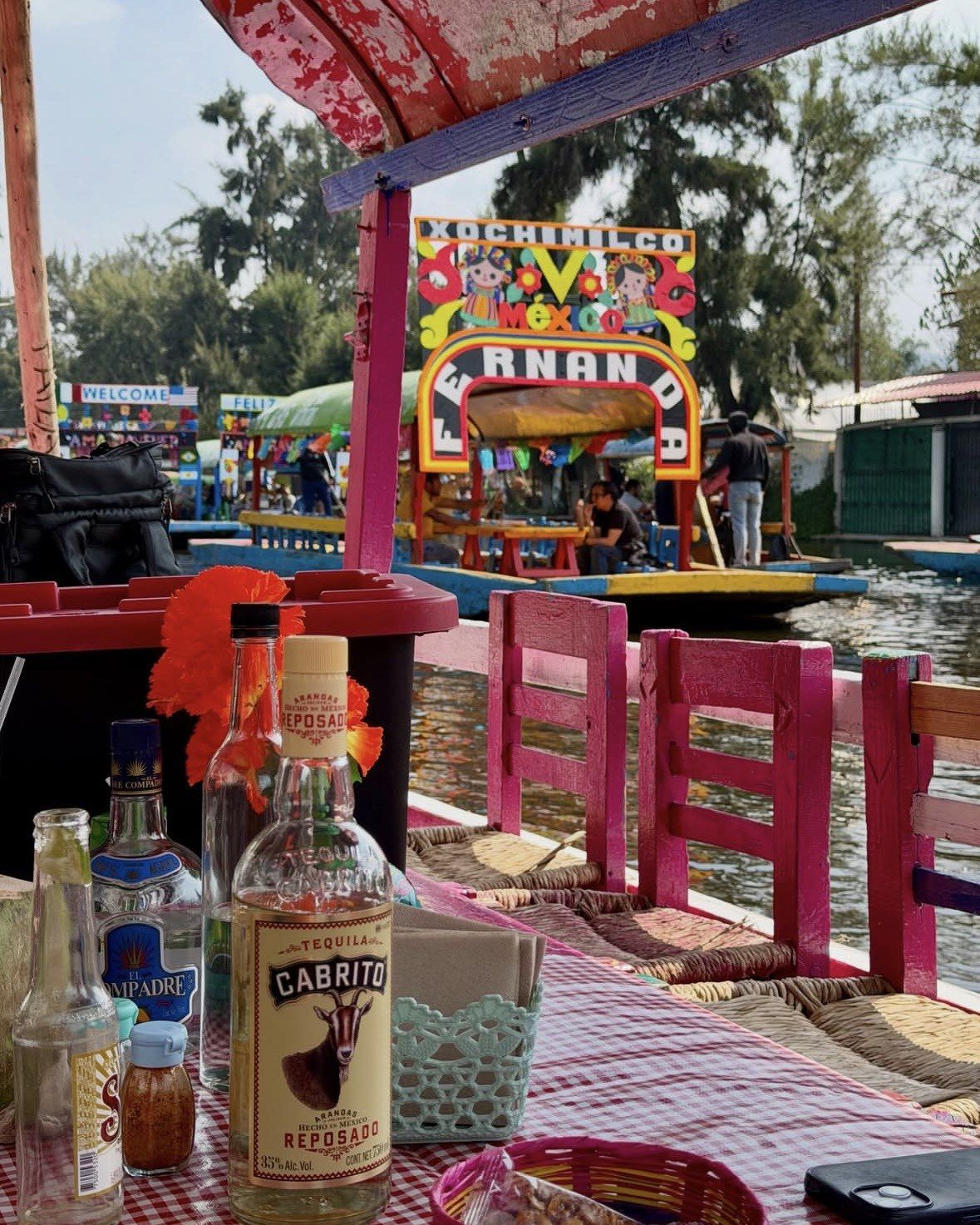
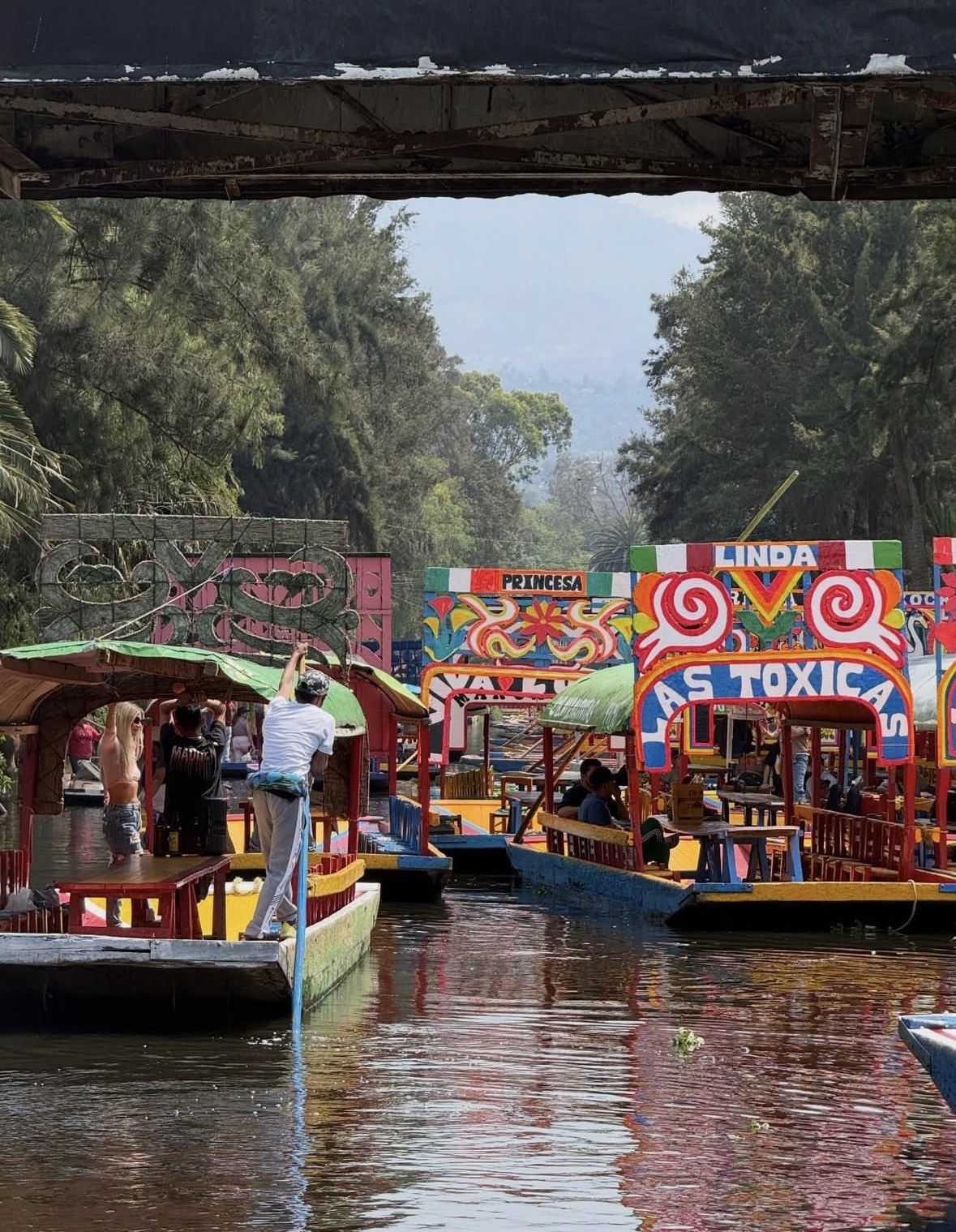
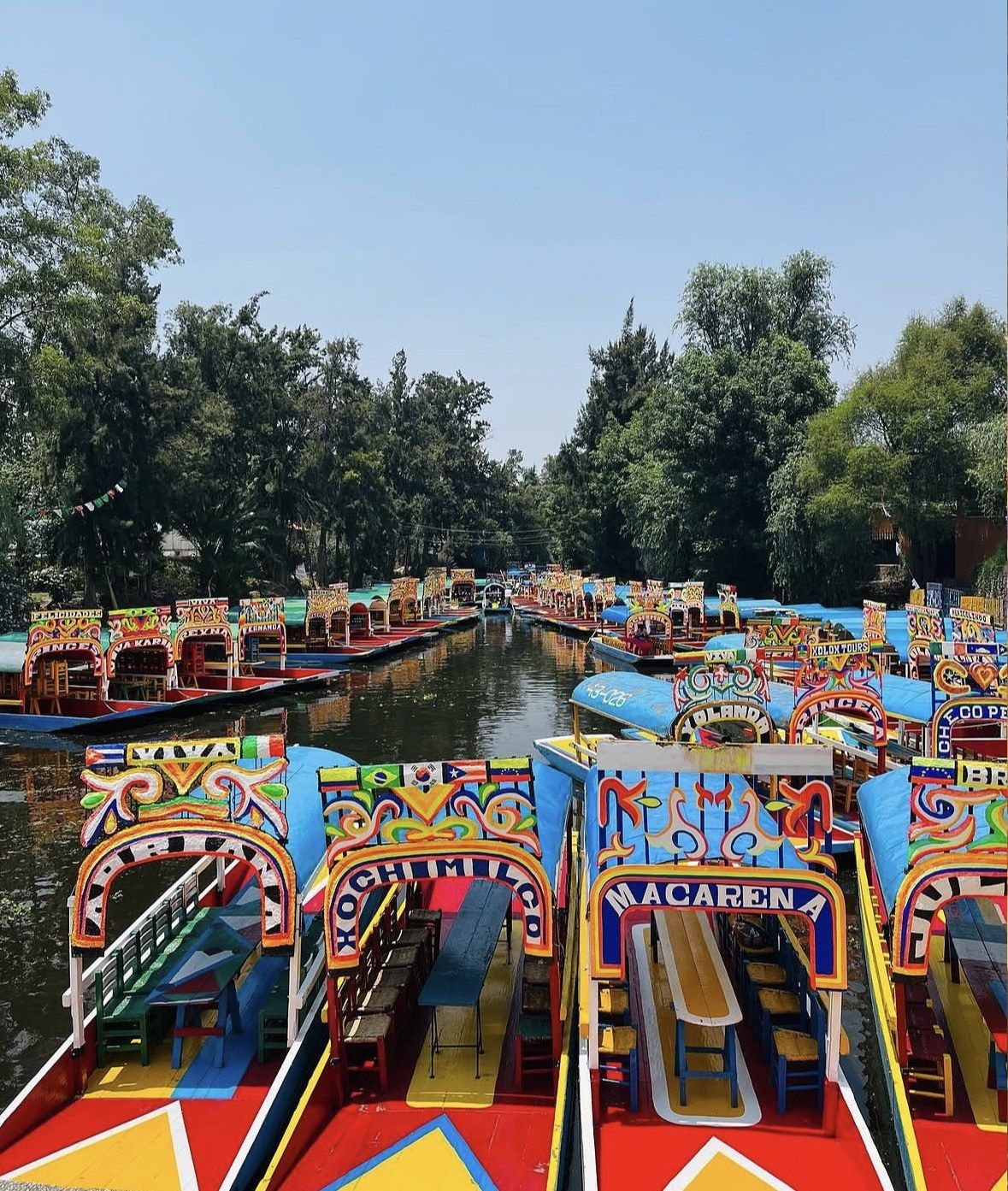
- The classic canal ride. Traditional routes leave from the Nativitas embankment, Zacapa and Las Flores Nativitas, the docks with large facilities, parking, craft markets and restaurants. Nuevo Nativitas bases about 220 boats and Caltongo about 215, and this is the water where the mariachi and food boats work. Two to three hours is the usual length, and four is not unusual.
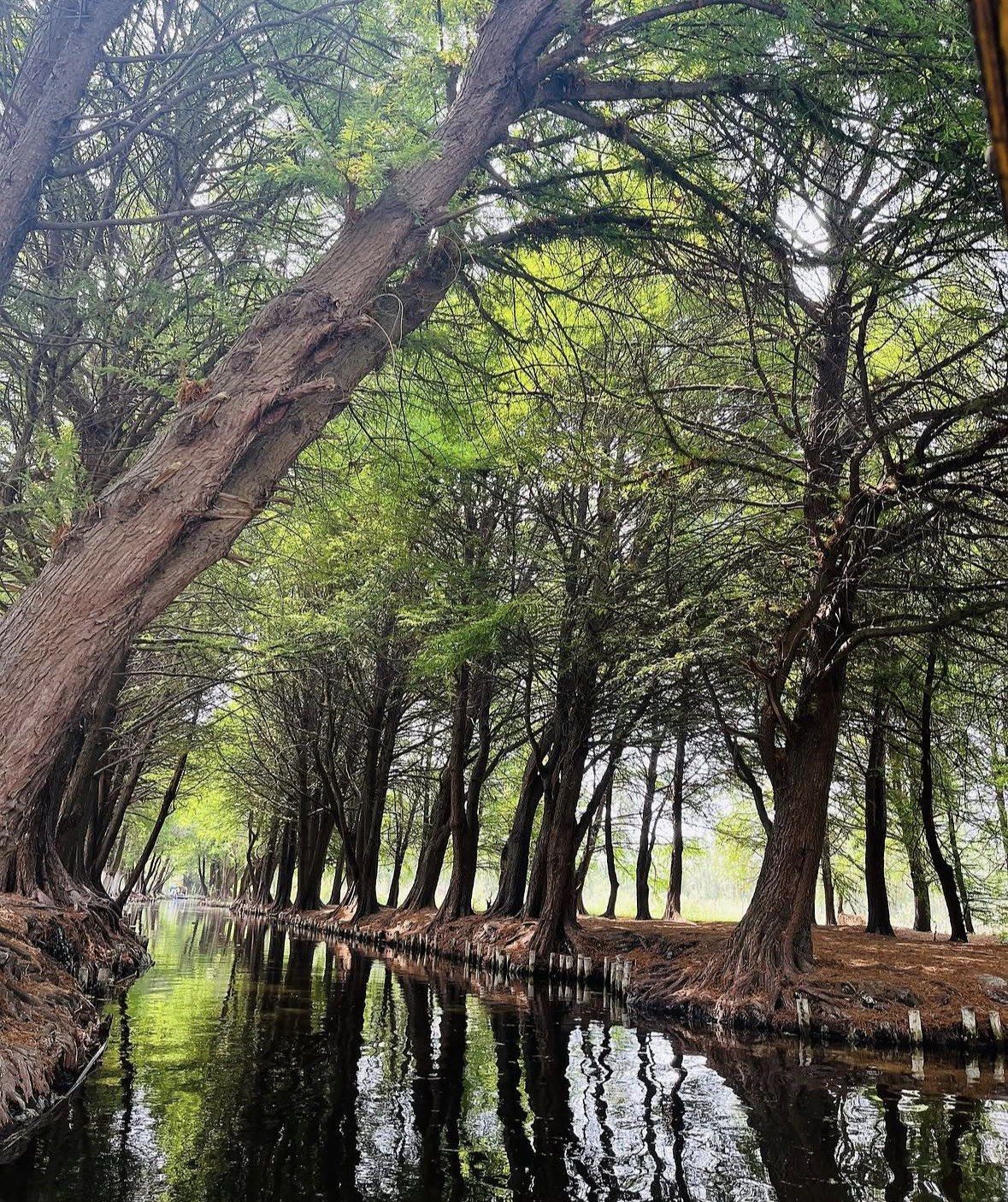
- Ecological routes through the protected zone. Three launches send their boats into the protected natural zone: Fernando Celada, Cuemanco and Puente de Urrutia, and that is the water where the migratory and endemic birds of Xochimilco turn up. Block out four to five hours if you take this kind of route from Belem, which normally works the Xaltocán and Caltongo lagoons. Fernando Celada opens at 8 a.m., ten minutes or so on foot from either the Xochimilco or the Francisco Goitia light rail station.
- Dawn on the water. First light is the quietest hour on the canals and the busiest for birdlife, which is why the paddle and canoe outings start before the trajinera traffic builds. Nuevo Nativitas is listed open daily from 6:00, earlier than any other dock that publishes hours.
- The Isla de las Muñecas. What you are going out to see is a chinampa on the edge of a canal, reached only by boat, and the borough rates the trip as worth making for its own sake. It lies well beyond the short traditional runs, so give it most of a morning instead of squeezing it into a one-hour ride. The private trip on this site leaves from Embarcadero Caltongo on Av. Nuevo León and runs 3.5 to 4 hours.
- Chinampa visits and landings. You can see the plots from the water on almost any route, but standing on a working one takes an arranged visit. Weekend chinampa experiences near Embarcadero Cuemanco go by advance reservation only, last at least three hours and include a guided trajinera ride plus a tour of the plot. Among the options here, the food outing is the one that puts you on a traditional chinampa and into an axolotl sanctuary, reaching the pier from the markets by bicitaxi.
The Island of the Dolls, timed for you
The long canal run to the Isla de las Muñecas is the trip people most often misjudge on time. This private outing from Embarcadero Caltongo takes 3.5 to 4 hours, with the trajinera out and back and entrance to the island, so the schedule is already worked out.
★ 4.9/5 · 11 reviews
What to do in Xochimilco besides the boats
Away from the water the borough carries 17 original barrios, a 16th-century church and convent, two large markets, a 165-hectare ecological park and a major art collection. The UNESCO-protected area takes in fourteen original villages alongside the canals and chinampas, listed on 11 December 1987 under cultural criterion (v) as part of property ID 412, shared with the historic centre of Mexico City.
These sights are spread out, and the docks sit to one side of them. Group them by area: the church, plaza and covered market stand together in the historic centre, while the ecological park and the Cuemanco plant market face each other across the road at the northern end of the canal zone. The Museo Dolores Olmedo is in La Noria, a separate location from the landings.
- The historic centre and its barrios. Seventeen original neighbourhoods make up the centre, each with its own history, and the plaza is where to start. The Jardín Juárez, also called Jardín Morelos, fills the church's former atrium with a bandstand kiosk, monuments and sculptures, 0.07 km from the Plaza Central and 0.12 km from the Clock Tower; the city describes it as the usual meeting point for trips down to the landings.
- San Bernardino de Siena. Work on the church and monastery on Av. Guadalupe I. Ramírez started in 1535 and the site was still being built 65 years later, in 1600; the dates to carry round with you are 1538 for the monastery, 1585 for the main church, 1604 for the cloister and 1609 for the opening of the monastery school. The main altarpiece is the reason to step inside: a 16th-century retablo in the Plateresque style, matched, the city says, by only one other survivor, at Huejotzingo in Puebla. A national monument since 1932, the complex was badly damaged in the September 2017 earthquake and its restoration works concluded in 2020.
- Mercado de Xochimilco. Av. Nuevo León s/n, Santa Crucita, open daily 8:00 to 20:00 across two buildings, with roughly 450 vendors trading inside and out. Produce from the borough's farming area is distributed through here, and the city points eaters to the comida corrida, the set-price midday meal, which is what to order between the boat and the museum.
- The flower and plant markets. Cacti, fruit trees, bonsai, tulips, violets and medicinal herbs fill the stands of about 600 traders at the Mercado de Plantas y Flores de Cuemanco, Canal Nacional 2000, daily from 8:00 to 16:00, with UAM Xochimilco 0.60 km away. If you would rather buy flowers within sight of the boats, use Madreselva instead: it is inside the Bosque de Nativitas, 0.28 km from Embarcadero Nuevo Nativitas and 0.18 km from Embarcadero Las Flores Nativitas.
- Parque Ecológico de Xochimilco. The park covers some 165 hectares at Periférico Oriente #1, Col. Ciénega Grande, with canals, chinampas and axolotl habitat protected inside it, directly across the road from the Cuemanco plant market. Boat rides inside the park are charged per boat per hour. Opening hours are not published on an official page, so check them before you build a morning around the visit.
- Museo Dolores Olmedo. The collection sits at Av. México 5843, La Noria, 16030; doors open Tuesday to Sunday at 10:00 and shut at 18:00, with nobody let in after 17:30. It holds the borough's major art collection and makes a solid half-day on land once the boat ride is behind you, provided you finish on the water by mid-afternoon.
Fairs and dates that change the trip
February belongs to Santiago Tulyehualco, where the Feria de la Alegría y el Olivo has been held in Plaza Quirino Mendoza every year since 1971, built around olive products and amaranth sweets. The borough's flagship spring event, the Feria de la Flor Más Bella del Ejido, ran 7 to 13 April according to the alcaldía's own bulletins.
Autumn is the busiest stretch. Seven staged productions were set on the chinampas, canals and open spaces for Day of the Dead 2026, among their titles La Catrina en Trajinera, La Leyenda del Nahual and La leyenda en el Gran Canal; the pulquería and offerings strand took over the historic centre from 29 October to 2 November, and the cemeteries kept 8:00 to 18:00 hours. The Festival Biocultural Noche de Muertos took place on 31 October 2026 at the Centro de Cultura Ambiental Acuexcomatl, Av. Año de Juárez 1900, San Luis Tlaxialtemalco, from 15:00 to 22:00, with the open-air stage 16:00 to 20:00 and the covered dark theatre 15:45 to 21:00.
Evening dates exist too. Embarcadero Cuemanco hosts the La Llorona canal show on Fridays, Saturdays and Sundays at 18:00 and 21:00 from 2 October to 22 November 2026; allow about three hours in total, the trajinera leg included. Night rides called Lunadas appear at Fernando Celada now and then, 8 p.m. to 10 p.m., with notice given only when one is actually going ahead. The rains shape the rest of the year for a day out here: the alcaldía dated its bulletin on reinforcing measures for the rains 3 June, and from then into October afternoon storms are the likeliest, so take a morning slot.
How to order a single day
Put the water first. Board in the morning, take two to three hours on the traditional stretch or four to five for the protected-zone route from Belem, and keep the afternoon for the land sights. Fernando Celada closes at 6 p.m. Monday to Friday and runs to 10 p.m. on Saturday and Sunday; Caltongo holds 9 a.m. to 10 p.m. every day of the year; the listed hours for Nuevo Nativitas are 6:00 to 22:00. Those hours apply to the landings, and the boats stop well before them. Timetables are published for only some docks, so confirm on the day.
After the boat, closing times set the sequence. The Cuemanco plant market shuts at 16:00, the Museo Dolores Olmedo takes its last admission at 17:30 and the Mercado de Xochimilco trades until 20:00, so do the nursery stock early, the museum next and the market last. The Tren Ligero runs until 00:00 every day, which keeps the evening open; Belem is about a ten-minute walk from its Xochimilco terminal.
Two interests will not fit into the same day: the long Isla de las Muñecas run and a full afternoon in the historic centre. Pick one. A guided trip settles the pairing for you, since the transfer from central Mexico City and the hours on the water are fixed in advance.
Matching each interest to a tour on this site
The guided options on this site cover three of the interests above, and each one includes the boat leg, so you are not assembling the day in pieces. Durations and inclusions are listed exactly as the operators publish them.
If this is a first visit and the Frida Kahlo house is on your list, the small-group day is the one that fits: 6 to 7 hours with private transportation, hotel pick-up and drop-off, a walk through Coyoacán, the trajinera ride, a music speaker on the trajinera, a mariachi song, a Mexican churro and a certified tour guide, plus entrance to the Frida Kahlo Museum when that option is selected. Gratuities are not included.
If the farming and the food are the point, the markets and canals outing starts in the stalls, uses a bicitaxi to reach the pier and lands on a traditional chinampa with an axolotl sanctuary, with coffee or tea and sweet bread or a tamal, then the ingredients for a taco placero and hibiscus flower water on the boat. You start at Patio ciento 20, a small local restaurant between Vicente Guerrero and Francisco I. Madero streets, round at the back. The Island of the Dolls trip is private and begins at Embarcadero Caltongo: trajinera out and back, entry to the island itself, Mexican snacks, a music speaker and a choice of tequila and beer or beer and pulque, with transport left out and charged at 500 pesos per extra person round trip.
| Interest | Tour | Duration | From | Rating |
|---|
| Canals plus Coyoacán and the Frida Kahlo museum | PREMIUM Frida Kahlo Museum and Xochimilco (Small Groups) | 6–7 hours | from $56 | 4.9 ★ (1352 reviews) |
|---|
| Markets, chinampa and axolotls | Guacamole a Tasty Adventure Through Xochimilco Markets and Canals | 3.5 hours | from 1,900 pesos | 5.0 ★ (12 reviews) |
|---|
| The Isla de las Muñecas by boat | Private tour to the spooky Island of the Dolls in Xochimilco | 3.5–4 hours | from 1,699 pesos | 4.9 ★ (11 reviews) |
|---|
Questions people ask
How much time do I need to see the main sights in Xochimilco?
One well-ordered day covers a canal ride plus either the historic centre or the Museo Dolores Olmedo. Two days work better if you want the four-to-five-hour ecological route from Belem as well as the markets and the church, since the long boat run takes most of a morning. The authorised landings work every day of the year, so what you plan around is opening hours.
Where can I see axolotls?
The axolotl, the amphibian emblematic of Mexico City, is the focus of conservation work inside the protected area, and its habitat is part of what the Parque Ecológico de Xochimilco shelters, along with canals and chinampas, over some 165 hectares at Periférico Oriente #1. An axolotl sanctuary and a traditional chinampa are both built into the markets and canals outing listed here. Opening arrangements for individual axolotl facilities are not published officially, so a guided visit is the dependable way in.
What is there to do once the boats stop for the day?
Evening plans work on land, since the channels carry no lighting. The Mercado de Xochimilco trades until 20:00 and the historic centre around the Plaza Central is easy to walk after dark. Caltongo and Fernando Celada keep their landings open until 10 p.m. at the weekend, and the Tren Ligero out of Xochimilco runs until 00:00 every day, which covers a late departure.
Do the markets open every day?
Yes. The Mercado de Xochimilco on Av. Nuevo León opens daily from 8:00 to 20:00, with roughly 450 vendors across two buildings, and the Cuemanco plant and flower market opens daily from 8:00 to 16:00 with about 600 traders. For flowers bought a few steps from the water, head for Madreselva in the Bosque de Nativitas, 0.28 km from Embarcadero Nuevo Nativitas.
Read also