In shortMost people book two to three hours on the water, and four-hour rides are not unusual. Add the transfer: 45 to 70 minutes each way by car from central Mexico City, or 75 to 90 minutes by metro and light rail. That makes a half day the realistic minimum and a full day the comfortable version, since ecological routes to the far lagoons run four to five hours.
2-3 hoursmost common ride length
4-5 hoursecological lagoon routes
1 to 6 hoursrange at Zacapa, since 1958
45-70 minutesdrive from central neighbourhoods
How long is a Xochimilco boat ride?
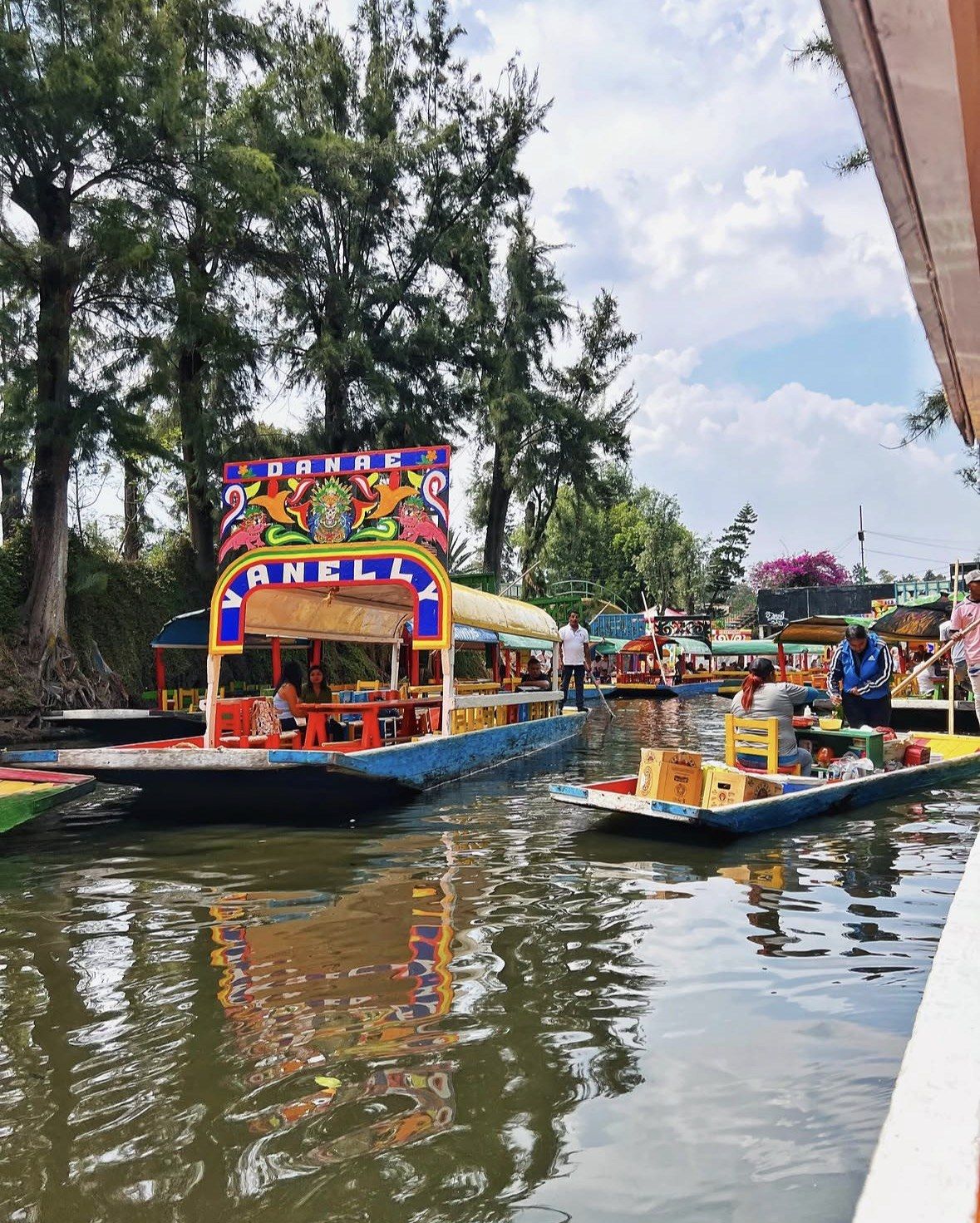
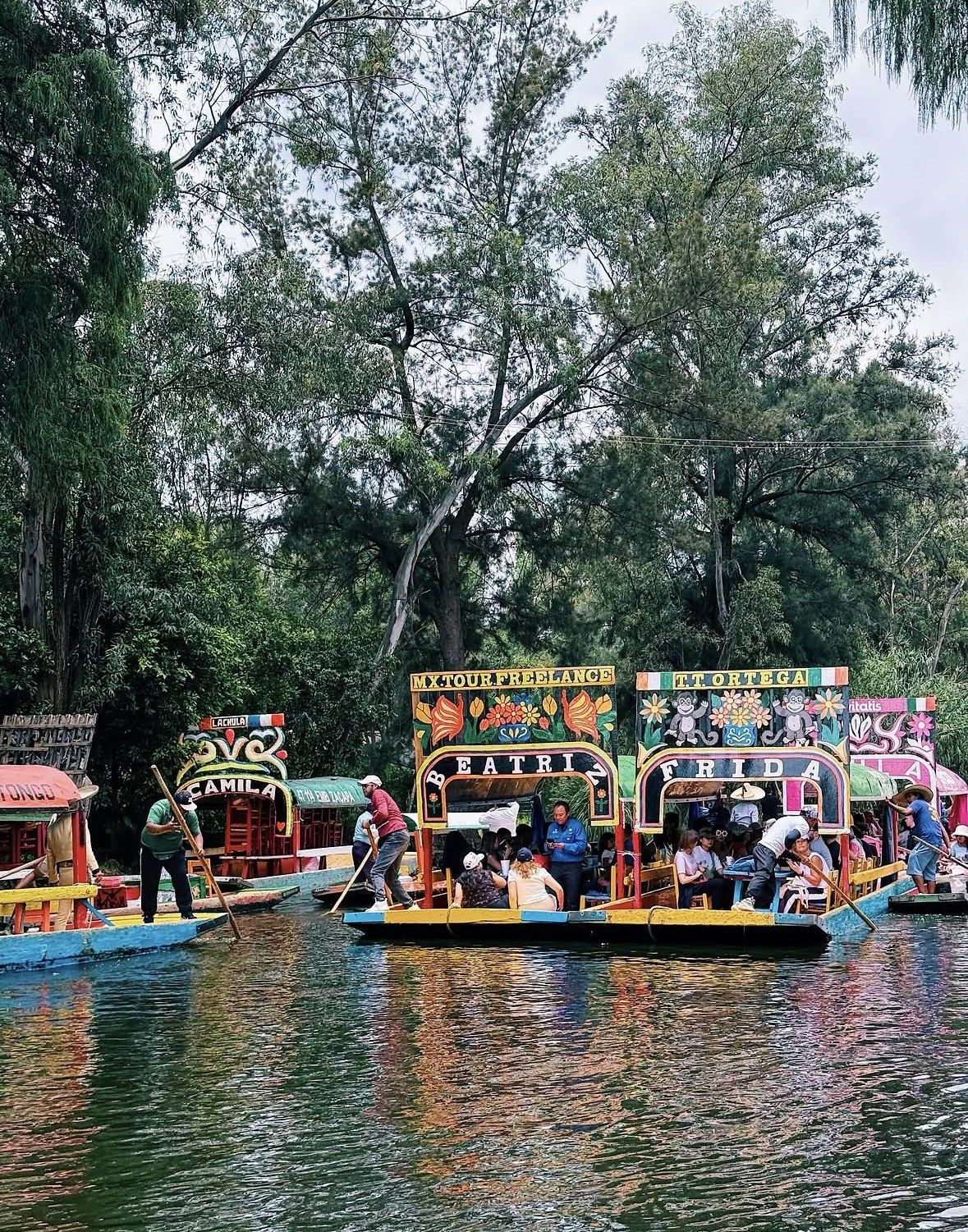
Boats are hired by the hour, so the number of hours you take is also the route you get. The city's own advice puts most visitors on the water for two to three hours and describes four-hour rides as not unusual. The widest spread of lengths is at Zacapa on the Nativitas embankment, in business since 1958, where rides run from a single hour to six.
An hour covers a loop in the channels beside the landing and very little else. Two to three hours is the standard choice because it reaches the main lagoons and the chinampa frontages, the hand-built farming plots the canals were cut around. The long end is a different trip: ecological routes from Belem typically run four to five hours and usually take in the Xaltocán and Caltongo lagoons, and the far canals and the Isla de las Muñecas, a canal-side chinampa reached by boat that the borough calls worth the detour on its own, sit in the same bracket.
| Time on the water | What that reaches |
|---|
| About one hour | A short loop in the channels next to the landing |
|---|
| Two to three hours | The main lagoons and the chinampas, the length most visitors choose |
|---|
| Four to five hours | Ecological routes through the protected canals, the Xaltocán and Caltongo lagoons from Belem, and the Isla de las Muñecas |
|---|
| Up to six hours | The longest single ride documented by the city, offered at Zacapa |
|---|
The canal-only half day
If your whole question is how many hours to spend on the water, this 3.5-4 hour trip from Embarcadero Caltongo takes the trajinera out to the Isla de las Muñecas with a bilingual English guide, so the long route is already timed for you.
★ 4.9/5 · 11 reviews
Travel time from the centre, before you count the boat
The canals lie about 28 km south of central Mexico City, and that distance is the part people leave out of their planning. Budget 45 to 70 minutes each way in a car or a ride-hail from the central neighbourhoods, and more than that if you are travelling on a Sunday afternoon. From Roma Norte on public transport the docks work out at about 75 to 90 minutes.
On the published public route there are two legs: Line 2 of the metro as far as Taxqueña, then the Tren Ligero to Terminal Xochimilco. That second leg is a single line of 18 stations over 13 km and takes roughly 30 minutes from end to end, with trains every four minutes, so waiting adds little to the total. The transport page on this site sets out the bus routes and the driving approach in detail. Double the transfer when you budget, because two to three hours afloat plus two hours of travel already accounts for most of a six-hour day. Tours that collect you at your hotel or start from a central meeting point fold that leg into their stated duration.
Xochimilco half day or full day?
The honest answer to how much time you need at Xochimilco is a half day at minimum and a full day as soon as a museum is involved. A canal trip of three and a half to four hours plus the travel time in each direction fills a morning or an afternoon and leaves the rest of the day in the city centre.
Take the full day when you want the trajinera plus something with fixed opening hours attached. Counted door to door, the small-group day on this site accounts for 6-7 hours and leaves you nothing to arrange: hotel pick-up and drop-off in private transportation, a walk through Coyoacán, the trajinera ride, a music speaker on the trajinera, a mariachi song, a Mexican churro and a certified tour guide, from $56, 4.9 ★ (1352 reviews). The private version covers similar ground in 4-6 hours with an air-conditioned vehicle, bottled water, Frida Kahlo Museum entry and a Mexican snack during the boat ride, from $195, 4.8 ★ (702 reviews).
Pick the half day if days in the city are scarce and the water is the point. Pick the full day if the Frida Kahlo Museum matters to you, because admission there is timed to a 15-minute arrival slot between 11:00 and 17:00, nothing is sold at the door and it closes on Mondays, which is awkward to build around a separately arranged boat ride.
Three sample days and the tour that fits each
Three shapes cover almost every Xochimilco itinerary people actually run. The difference between them is not the boat, which is much the same ride in each case, but what you attach to it on land.
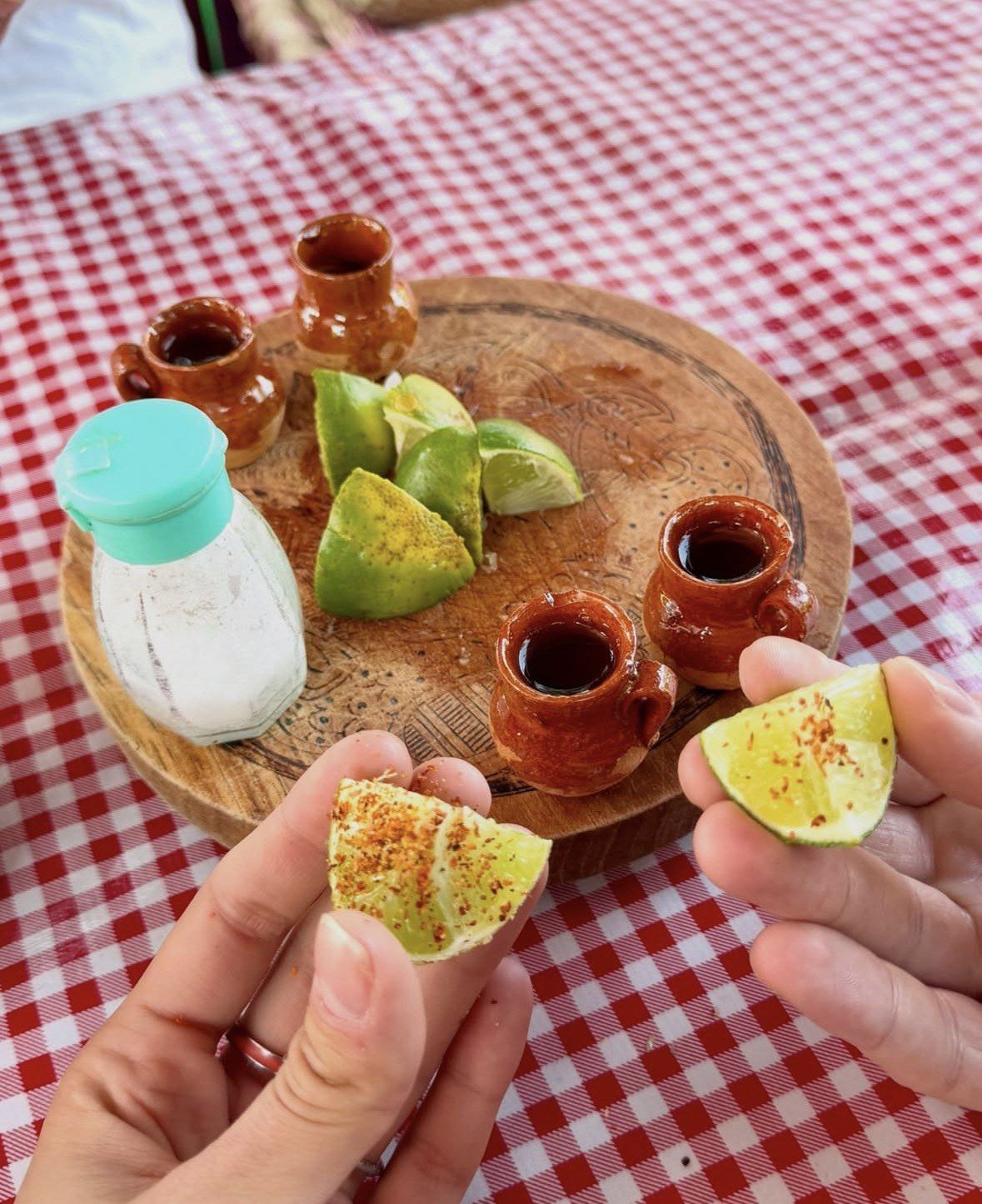
- Canals only: on the water between 8:00 and 10:00, two to three hours afloat, back in the city by mid-afternoon. That length maps onto the Private tour to the spooky Island of the Dolls in Xochimilco, which takes 3.5-4 hours and is rated 4.9 ★ (11 reviews), from 1,699 pesos; a bilingual English guide, the trajinera out and back, entrance to the Island of the Dolls, Mexican snacks, a music speaker and tequila and beer or beer and pulque are part of it, and transport is not.
- Canals plus the historic centre and the market: a morning boat, then the Mercado de Xochimilco on Av. Nuevo León, open daily 8:00 to 20:00 with roughly 450 vendors across two buildings and comida corrida as the thing to order, and the 17 original barrios of the historic centre around San Bernardino de Siena and the Jardín Juárez, 0.07 km from the Plaza Central. The Island of the Dolls trip works for this plan as well, since it begins and ends inside the borough at Embarcadero Caltongo on Av. Nuevo León.
- Canals plus Coyoacán or a museum: PREMIUM Frida Kahlo Museum and Xochimilco (Small Groups), 6-7 hours, from $56, 4.9 ★ (1352 reviews), does the whole run in one go, with the museum entrance when that option is selected and the meeting point at the Angel of Independence, at the entrance of the Sheraton Hotel. For a museum without leaving the borough, the Museo Dolores Olmedo sits at Av. México 5843 in La Noria; it runs Tuesday to Sunday from 10:00, the doors shut at 18:00 and nobody is admitted after 17:30, so a boat that finishes by mid-afternoon still leaves you a usable hour or two inside.

Boats stop around 17:00 even where docks stay open
The usable window on the water is roughly 8:00 to 17:00, shorter than the hours the landings themselves keep, because nothing lights the channels once the sun is down and the standing advice is to be aboard before 15:00. That caps every plan above: a four-to-five-hour route needs a morning start.
Landing hours cover the market stalls and restaurants on shore as much as the water. Three timetables are published officially and they are the three worth planning around: Nuevo Nativitas every day from 6:00 to 22:00; Caltongo from 9 a.m. to 10 p.m. with no seasonal break; Fernando Celada from 8 a.m., closing at 6 p.m. Monday to Friday and at 10 p.m. on Saturdays and Sundays. Confirm on the day, because several landings publish no timetable at all. Count your hours backwards from the closing time of the one your trip uses.
Leaving late is the straightforward part. The light rail keeps running until 00:00 seven days a week, and it starts at 05:00 from Monday to Friday, 06:00 on Saturdays and 07:00 on Sundays and holidays.
Questions people ask
How much time do you need at Xochimilco if you only have one day in Mexico City?
Give it a morning rather than a whole day. Board between 8:00 and 10:00, take two to three hours on the water, and you are back in the central neighbourhoods inside 45 to 70 minutes by car. On that plan the afternoon stays free for the centre of the city, which is listed with the canals as part of the same World Heritage property.
Can I see Xochimilco and the Frida Kahlo Museum on the same day?
Yes, and the museum is the part that dictates the timing. Admission is bought in advance for a calendar date and a 15-minute arrival slot between 11:00 and 17:00, and the house is closed on Mondays, with hours of Tuesday 10:00 to 18:00, Wednesday 11:00 to 18:00, Thursday 10:00 to 21:00 and Friday to Sunday 10:00 to 18:00. The 6-7 hour small-group day and the 4-6 hour private tour both include the entrance (the small-group day when that option is selected), which removes the slot problem.
How long does it take to get from Coyoacán to the canals?
The light rail links the two: Tasqueña to Xochimilco is 18 stations and 13 km, about 30 minutes end to end, with trains every four minutes. Coyoacán itself sits roughly 30 minutes' drive south of the tourist centre, about 20 to 35 minutes from Roma Norte by ride-hail or 35 to 50 minutes by metro. Staying there shortens the Xochimilco leg more than any other central neighbourhood.
Does the time of year change how long the trip takes?
Seasonal closures do not come into it, since the authorised landings work all 365 days of the year. Rain is the variable: the borough issued its bulletin on reinforcing measures for the rains on 3 June, and from then into October afternoon storms are likeliest, which is a further reason to put the boat ride in the morning. Festival weeks add their own timings, such as the Feria de la Flor Más Bella del Ejido, which ran 7 to 13 April according to the alcaldía's bulletins.
How long should I plan for with small children?
Keep it to the short end, around two hours afloat plus the transfer. The 18-passenger limit per trajinera is applied strictly and children under four count towards it, so work out your numbers before you commit to a boat. Passengers stay seated with hands and feet inside and may not move to another boat during the ride, which is easier to manage over two hours than over five.
Read also