In shortThe best time to visit Xochimilco is a dry-season weekday morning, boarding between about 8:00 and 10:00. No month is ruled out, because the authorised landings operate every day of the year; daylight is the real limit, since the channels have no lighting and boats are effectively on the water from about 8:00 to 17:00. The borough's bulletin on reinforcing measures for the rains is dated 3 June, and afternoon storms are likeliest from then. Sundays bring the music and the queues.
365 daysdocks open every day
8:00 to 17:00boats on the water
6:00 to 22:00Nuevo Nativitas daily
3 Junerain measures bulletin
The best time to visit Xochimilco is a weekday morning in a dry month
Three things decide how the day goes, and the season is the least of them. All ten authorised embarcaderos, the boat landings, work 365 days a year, so nothing shuts for winter and nothing closes for the summer. What changes is the weather at the hour you are on the water, how many boats are out with you, and how much usable daylight is left once you push off.
Come in the dry months, pick a Tuesday, Wednesday or Thursday, and be on the water between 8:00 and 10:00. The channels are quiet, the boatmen are unhurried, and the whole afternoon is left for the historic centre or for the Museo Dolores Olmedo in La Noria, which takes its last admission at 17:30. Saturday and Sunday afternoons make sense only if the crowd and the party are the reason you came.
Xochimilco weather and what it does to a boat ride
In the dry months the pattern repeats from day to day: cool, bright mornings, flat water, low light running along the chinampas, then warm hours around midday. The light is at its best before 11:00, and that alone is reason enough to take an early departure.
From June the day runs the other way round. Mornings often stay clear and the rain arrives in the afternoon, heavy and brief. The borough treats it as an operational matter: its bulletin on reinforcing measures for the rains carries the date 3 June. Between June and October, put the ride in the morning and treat the afternoon as the part of the day the weather can take from you.
A trajinera, the flat-bottomed canal boat, has a roof over the long table and open sides, which handles sun and light drizzle well. A real downpour comes in sideways, and the air over the canal is colder than the street. In the wet months carry a layer and something waterproof for your bag, check the weather widget on this page the evening before, and if the forecast is unsettled, move your departure earlier rather than later.
What changes between a Tuesday and a Sunday
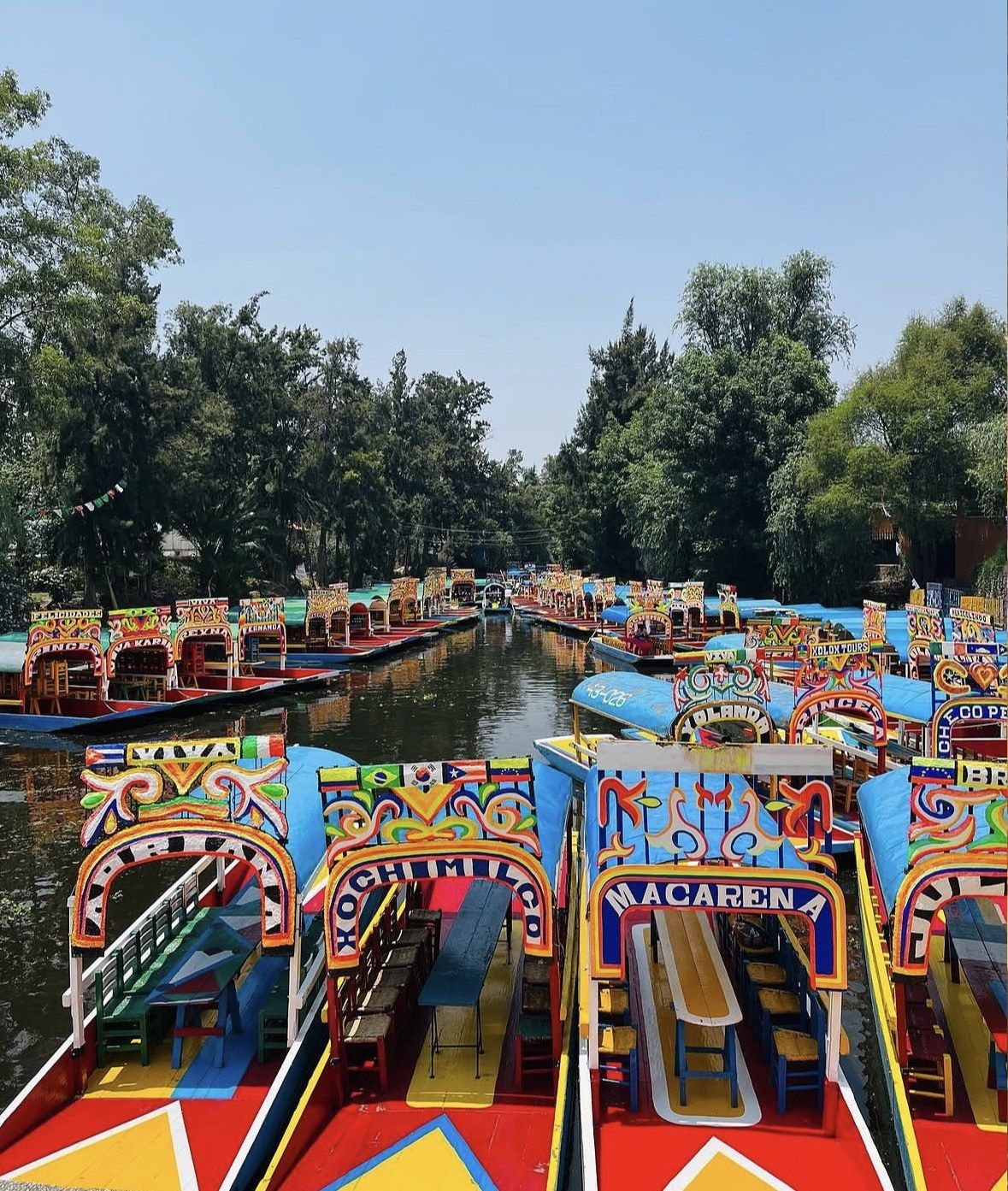
Midweek the canals are a different place. The two biggest fleets sit at Nuevo Nativitas, around 220 boats, and Caltongo, around 215, and on a Tuesday morning most of them stay tied up. You hear the pole going into the water and the birds in the willows, the boatman has time to answer questions, and the food and music boats come to you instead of closing in around you.
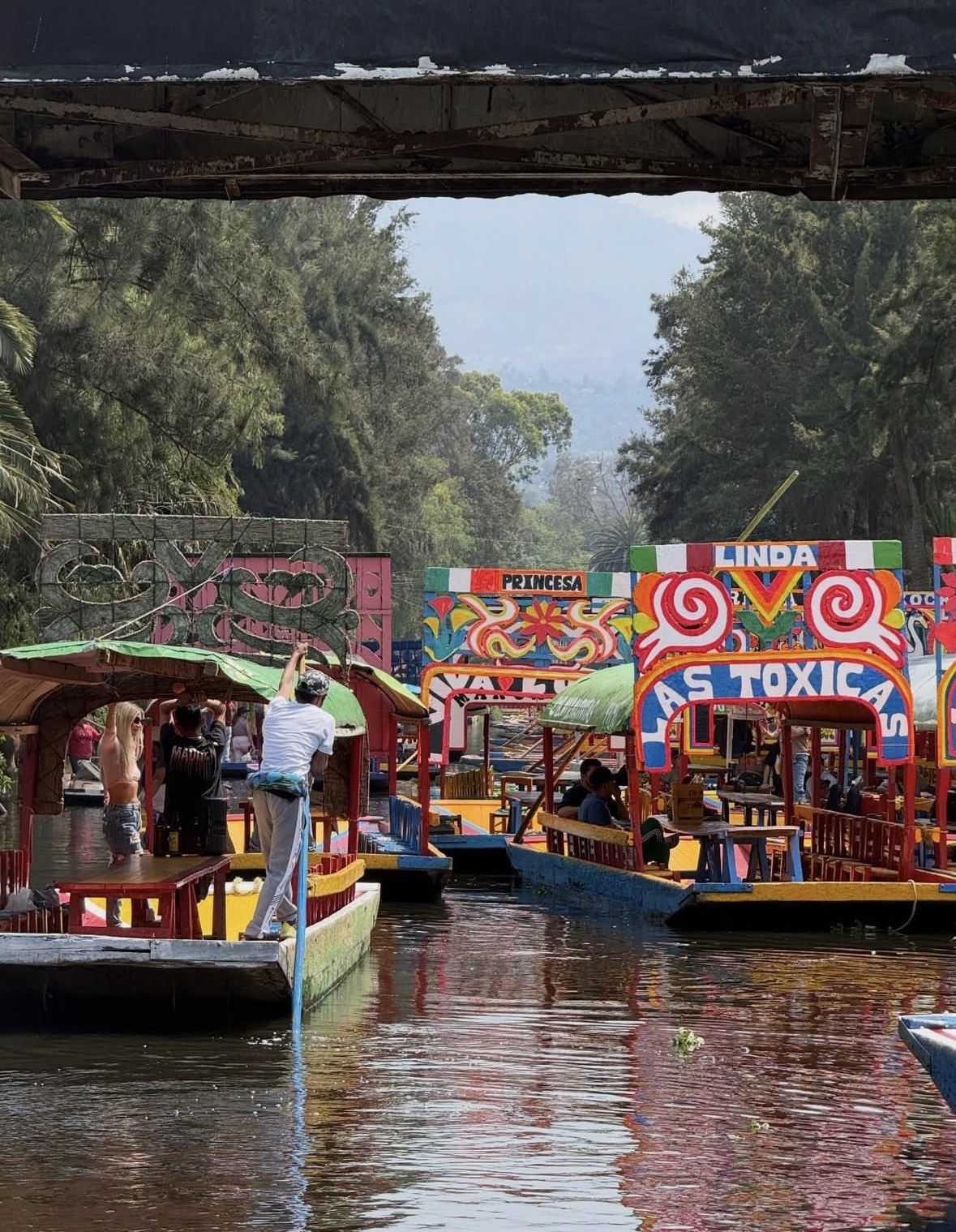
Saturday and Sunday are the party version. Family groups fill the tables, mariachi and marimba boats work the traffic, and the channels near the Nativitas embankment get crowded enough that boats sit alongside each other. Expect a queue at the landing on a Sunday afternoon, and expect the trip south to drag: a car or ride-hail takes 45 to 70 minutes from the central neighbourhoods, with Sunday afternoon the worst case. The weekend does buy later hours on the ecological side, since Fernando Celada runs Saturday and Sunday 8 a.m. to 10 p.m. against 8 a.m. to 6 p.m. Monday to Friday.
If the weekend is all you have, take Saturday morning over Sunday afternoon. Salitre, the oldest and smallest of the landings with about 51 boats, is where to go when you want the fewest hulls around you on a busy day.
Choosing the hour you board
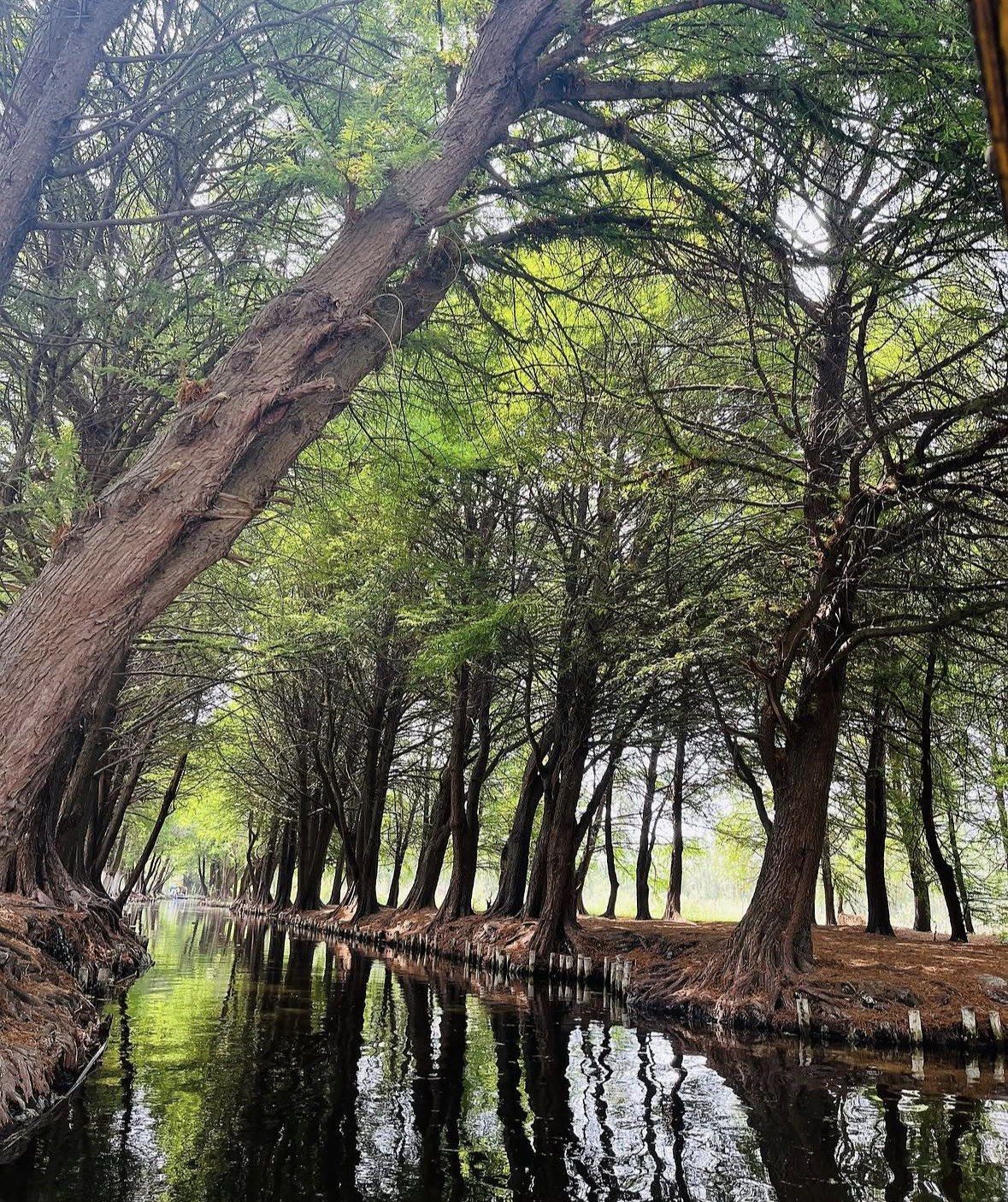
Sunrise is the specialist slot and the quietest water of the day. The borough points to migratory and endemic birds on the ecological routes that leave from Fernando Celada, Cuemanco and Puente de Urrutia, and dawn is when they are working. Nothing on land is open yet, which is part of the appeal.
Mid-morning suits most visitors. Nuevo Nativitas is listed from 6:00 and Fernando Celada from 8 a.m., so a 9:00 start gives you the usual two to three hours on the water and puts you back on land before the heat or the storm.
Afternoons are louder and shorter than the gate hours suggest. There is no lighting of any kind along the channels, so the working window on the water closes around 17:00 whatever time the dock shuts, and boarding by 15:00 keeps you off dark water. Caltongo lists 9 a.m. to 10 p.m. and Nuevo Nativitas 6:00 to 22:00, but those hours cover the landing, its market and its restaurants.
Evening rides do happen, though less often than the timetable implies. Fernando Celada puts on a Lunada, its 8 p.m. to 10 p.m. night run, now and then, and the dock announces it only for the dates it actually happens. Only three docks publish hours at all, so check on the day before you build a plan around a late departure.
| Dock | Published hours | What it means for your departure |
|---|
| Nuevo Nativitas | Daily 6:00 to 22:00 | Earliest published opening, on the traditional side, with the craft market and small restaurants on land |
|---|
| Caltongo | 9 a.m. to 10 p.m., all year | Traditional routes and about 215 boats, with nothing leaving before 9:00 |
|---|
| Fernando Celada | Mon to Fri 8 a.m. to 6 p.m.; Sat and Sun 8 a.m. to 10 p.m. | Protected-zone route, about ten minutes on foot from the Xochimilco or Francisco Goitia light rail stations; occasional Lunadas 8 p.m. to 10 p.m. |
|---|
| Other authorised docks | Open every day of the year, hours not published | Zacapa, Las Flores Nativitas, Belem, Salitre and Puente de Urrutia: confirm on the day |
|---|
Dawn on the water
Sunrise is the quietest hour on the canals, and this 5-hour trip puts you out at first light with your own kayak, vest and paddle. Breakfast and round-trip transport in an air-conditioned vehicle are options you can add.
★ 4.6/5 · 95 reviews
The months when the borough is busiest
February belongs to Santiago Tulyehualco, where the Feria de la Alegría y el Olivo has filled Plaza Quirino Mendoza every February since 1971. In spring the Feria de la Flor Más Bella del Ejido takes over, running 7 to 13 April according to the alcaldía's bulletins. Fair weeks are poor timing for a quiet canal and good timing if you want the flower and chinampa economy on display.
Late October into the first days of November carries the heaviest demand of the year. The 2026 borough programme staged seven productions on the chinampas, canals and open spaces, among them La Catrina en Trajinera, La Leyenda del Nahual and La leyenda en el Gran Canal; the pulquería and offerings strand ran 29 October to 2 November in the historic centre, and the Xochimilco cemeteries opened 8:00 to 18:00. Evening slots in that stretch go to the La Llorona show at Embarcadero Cuemanco, which in 2026 runs from 2 October to 22 November on Fridays, Saturdays and Sundays, at 18:00 and again at 21:00, and takes about three hours of the night once the trajinera leg is counted.
In those weeks the date comes before everything, including the hour you board. The Day of the Dead page on this site sets out the dates as they stand in the borough's own announcements.
Fixing the date and the departure time
Two decisions matter here: the calendar date and the hour you get on the water. The dock, the length of the route and whether you add Coyoacán all follow from those, and both ends of the day have a tour on this site built around them.
- Dry months, Tuesday to Thursday, on the water by 9:00: the quietest canals and the best conditions for the protected-zone routes.
- June to October: keep the ride in the morning and leave the afternoon loose, because that is when the rain lands.
- Saturday or Sunday afternoon: the full fleet out of Nativitas and Caltongo, the music boats, and a queue at the landing.
- Dawn with a paddle in your hands: Sunrise Kayak Tour in Xochimilco, 5 hours, from 480 pesos, 4.6 ★ (95 reviews). Kayak, vest and individual paddle come with the trip, along with traveller insurance, and you can add breakfast plus round-trip transport in an air-conditioned vehicle.
- Later in the day, with the music on board: PREMIUM Frida Kahlo Museum and Xochimilco (Small Groups), 6-7 hours, from $56, 4.9 ★ (1352 reviews). Hotel pick-up in private transport, a walk through Coyoacán, a trajinera ride with a speaker aboard, a mariachi song and a Mexican churro.
- A 07:50 a.m. start if you want the morning used properly: Xochimilco, Coyoacan and Frida Kahlo with Optional Lunch, 9 hours, from $40, 4.6 ★ (8447 reviews), meeting at Miga Cafe, Liverpool 174, or half an hour later behind the Palace of Fine Arts at 08:20 a.m.
Questions people ask
Is Monday a good day to visit Xochimilco?
On the water, yes: the authorised docks operate every day of the year, and Monday is one of the emptiest days on the canals. On land it costs you the museums. The Frida Kahlo Museum in Coyoacán closes on Mondays and the Museo Dolores Olmedo opens Tuesday to Sunday, 10:00 to 18:00. For the canals plus a museum in one day, go Tuesday to Sunday.
How early can I reach the canals on public transport?
Your earliest arrival depends on one line. Taxqueña on Metro Line 2 is where you change to the Tren Ligero for Terminal Xochimilco, 18 stations and 13 km that take roughly 30 minutes. First trains leave at 05:00 Monday to Friday, 06:00 on Saturdays and 07:00 on Sundays and holidays, with service running until 00:00 in all three cases. A Sunday sunrise departure does not work on rails, which is why the early tours use a vehicle.
How late can I stay before leaving Xochimilco?
The light rail is the dependable late link, running until 00:00 every day of the week. The later dock hours cover the landings rather than the water, so an evening in the borough usually means time on land: the Mercado de Xochimilco trades daily 8:00 to 20:00, and the historic centre is a short distance from the Plaza Central.
How long should the ride itself be at that hour?
Two to three hours is what the city describes as normal, and a four-hour ride raises no eyebrows. Stretch to the four-to-five-hour ecological run from Belem, which takes in the Xaltocán and Caltongo lagoons, and your start time matters far more; Zacapa, on the water since 1958, offers rides of anything between one hour and six. Count backwards from your dock's closing time: Fernando Celada stops at 6 p.m. Monday to Friday.
Do I really need an exact date before I plan the day?
The canals themselves do not require one, since the ten authorised embarcaderos work 365 days a year. Everything attached to them does. The Frida Kahlo Museum will not let you drift: you choose a calendar date in advance and then a 15-minute arrival window somewhere between 11:00 and 17:00, with the busier dates marked as low availability, and the tours on this site also leave at set morning times. Set the date, then the hour, then the rest.
Read also