In shortA trajinera is the flat-bottomed wooden boat that works the Xochimilco canals: benches and a long table under a roof, a painted arch over the bow carrying a woman's name, and a boatman who poles it along from the stern. You hire the whole boat by the hour rather than by the seat, with a ceiling of 18 people aboard.
18passengers per boat, maximum
6-8seats on smaller boats
2-3 hoursusual ride length
4.9 ★ (1352 reviews)small-group tour rating
What is a trajinera
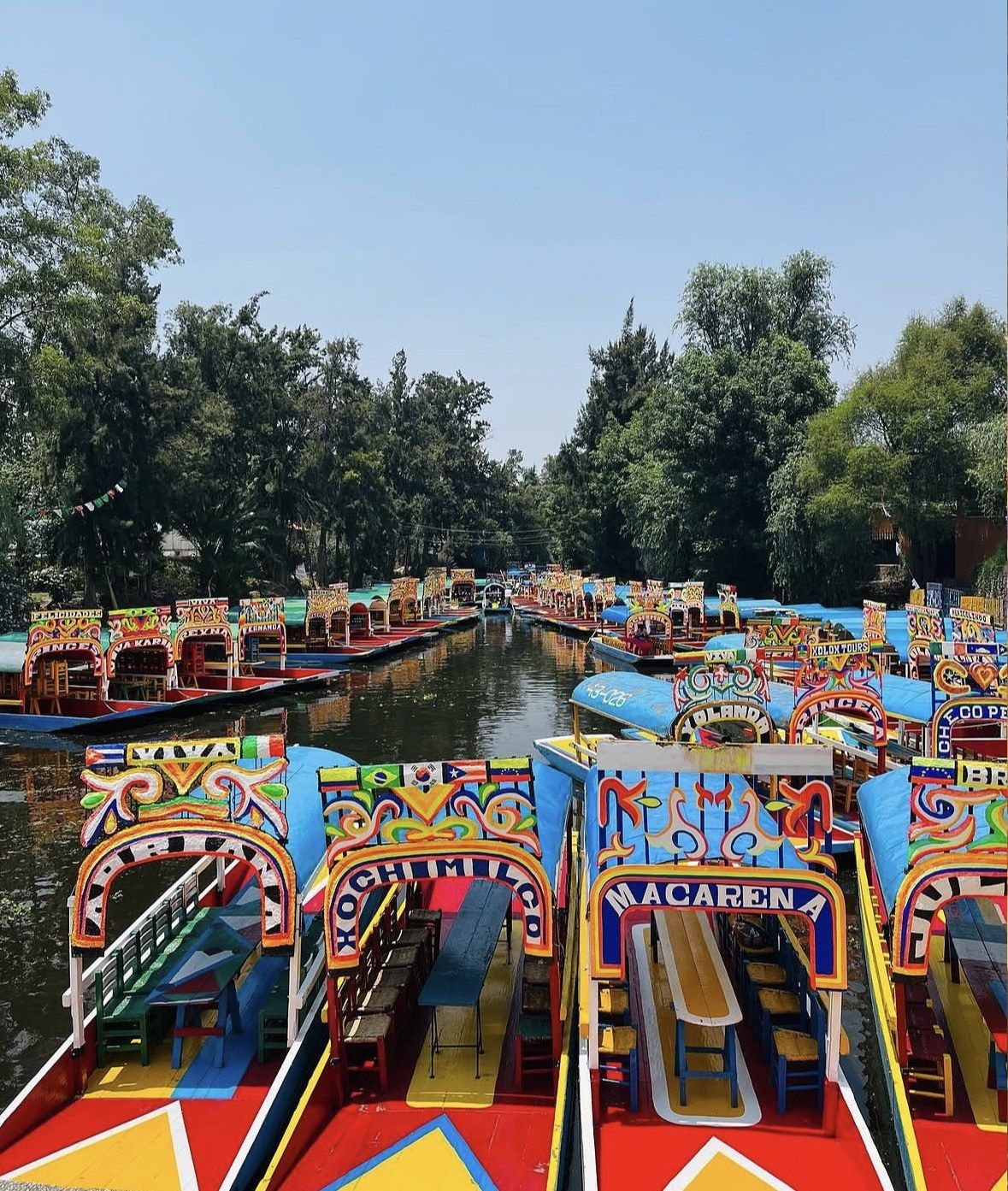
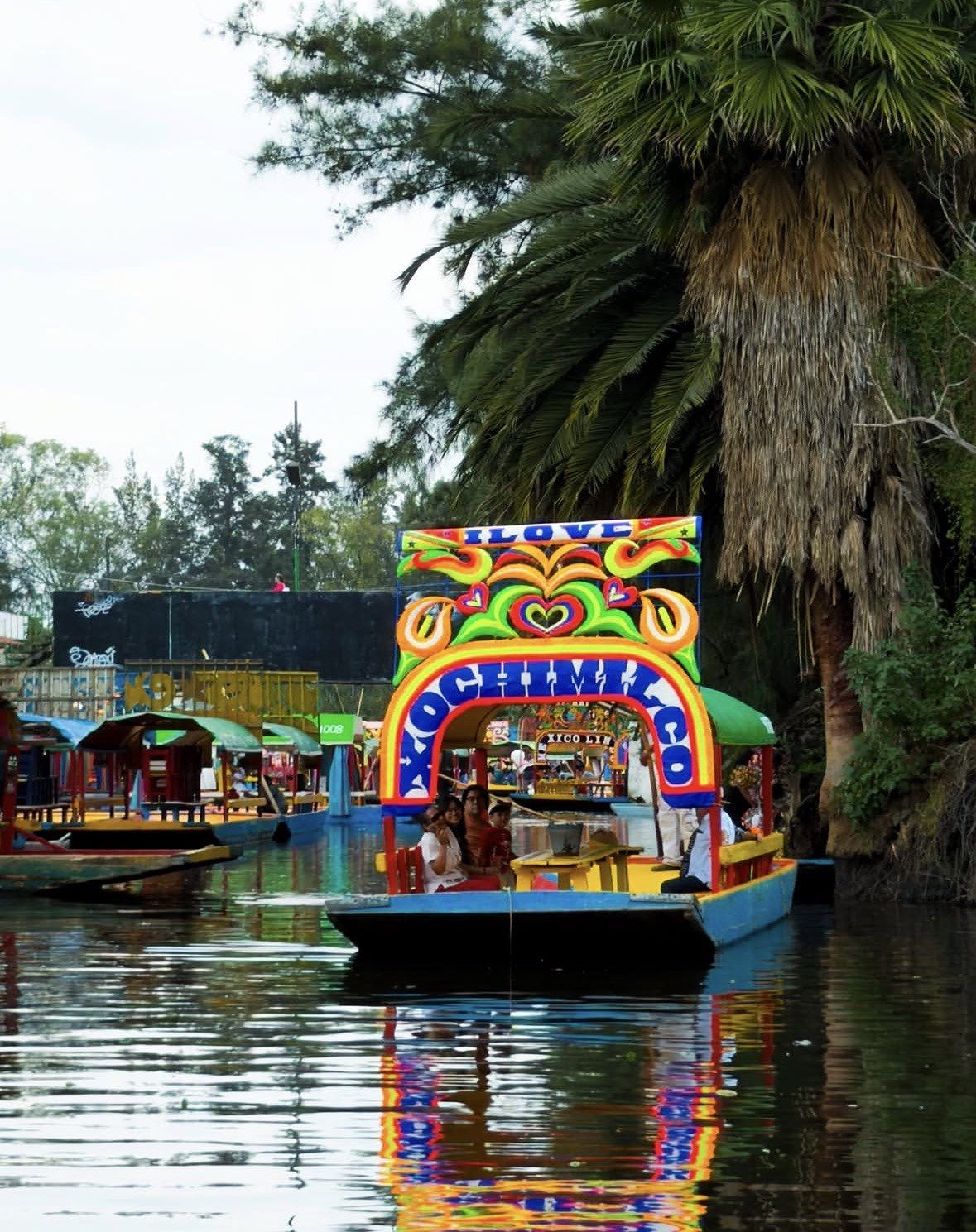
A trajinera is a wooden boat with a flat bottom and very little draught, built for shallow water and for channels barely wider than the hull. Over the bow stands a painted arch, usually with a woman's name picked out across the top in capital letters, and that name is how the boat is identified at the landing stage.
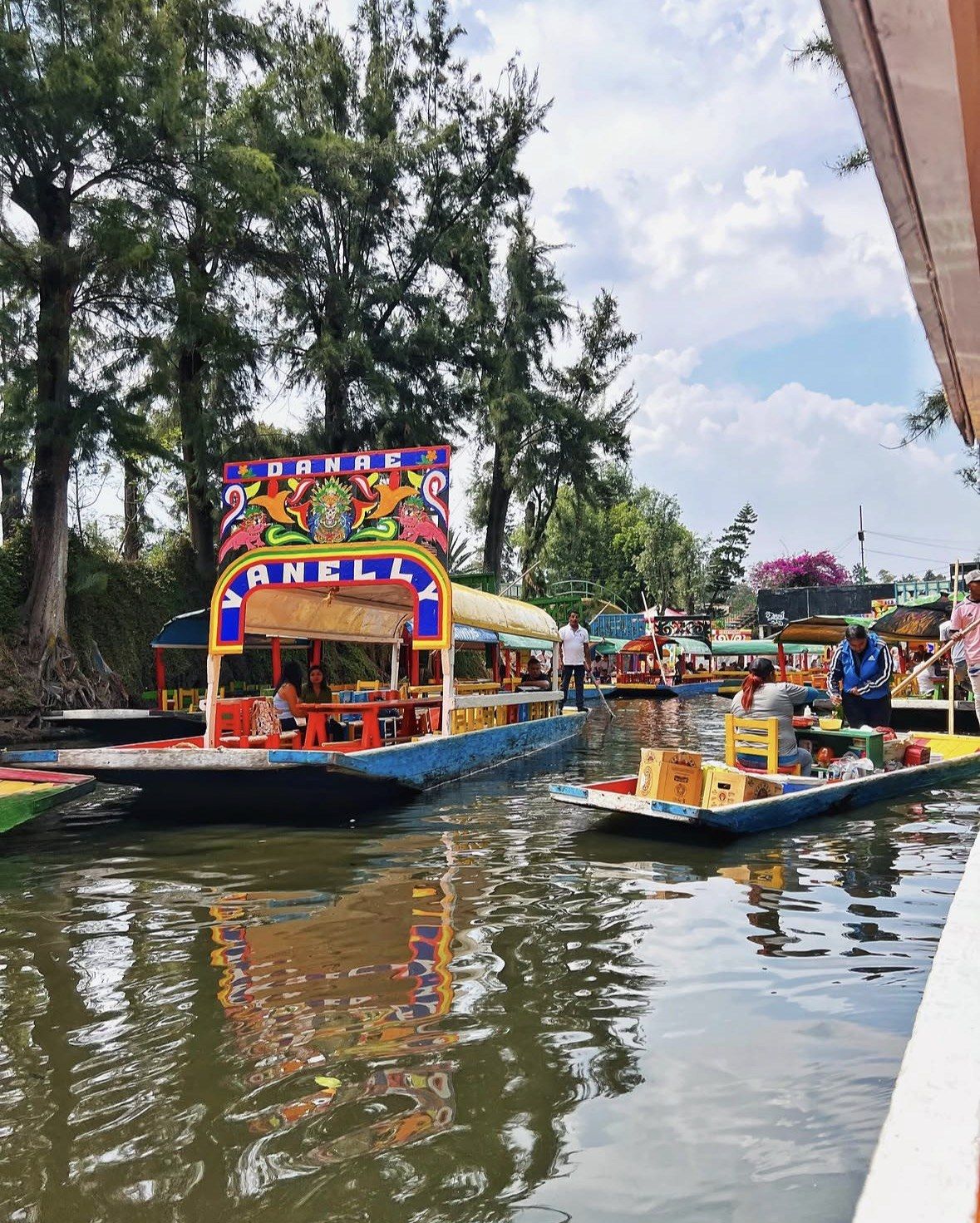
The layout inside does not vary much. A long table runs down the centre, benches line both sides, and a roof covers the whole length, so the table stays usable in strong sun and in a rain shower. One boatman works the boat from the stern with a long pole, pushing off the canal bed; the pace is slow enough to read the plot edges and the willow lines as you pass.
What is a trajinera in practice: a table and benches under a roof, on a hull shallow enough for the chinampa channels, which is why the ride feels like a long meal that happens to be moving. In English the boats get called barges or gondolas, and neither word fits. The borough calls them trajineras, and so does everyone at the water.
The trajinera ride with the day built around it
This 6-7 hour small group includes the trajinera ride, a music speaker on the trajinera, a mariachi song and a Mexican churro, with private transportation collecting you at your hotel, from $56 and rated 4.9 ★ (1352 reviews).
★ 4.9/5 · 1,352 reviews
How do trajineras work
The boat is hired whole and charged by the hour, so what you take on is the vessel and the boatman's time rather than a seat alongside strangers. The same logic applies away from the main canals: boat rides inside the Parque Ecológico de Xochimilco are also charged as a flat fee per boat per hour.
Ride length is the decision that shapes the day. Most visitors go out for two to three hours, and four hours is not unusual. Embarcadero Zacapa, on the Nativitas embankment and working since 1958, offers anything from one hour up to six. From Belem the ecological runs usually take four to five hours and take in the Xaltocán and Caltongo lagoons, which is a long commitment for two people and sensible for a large group.
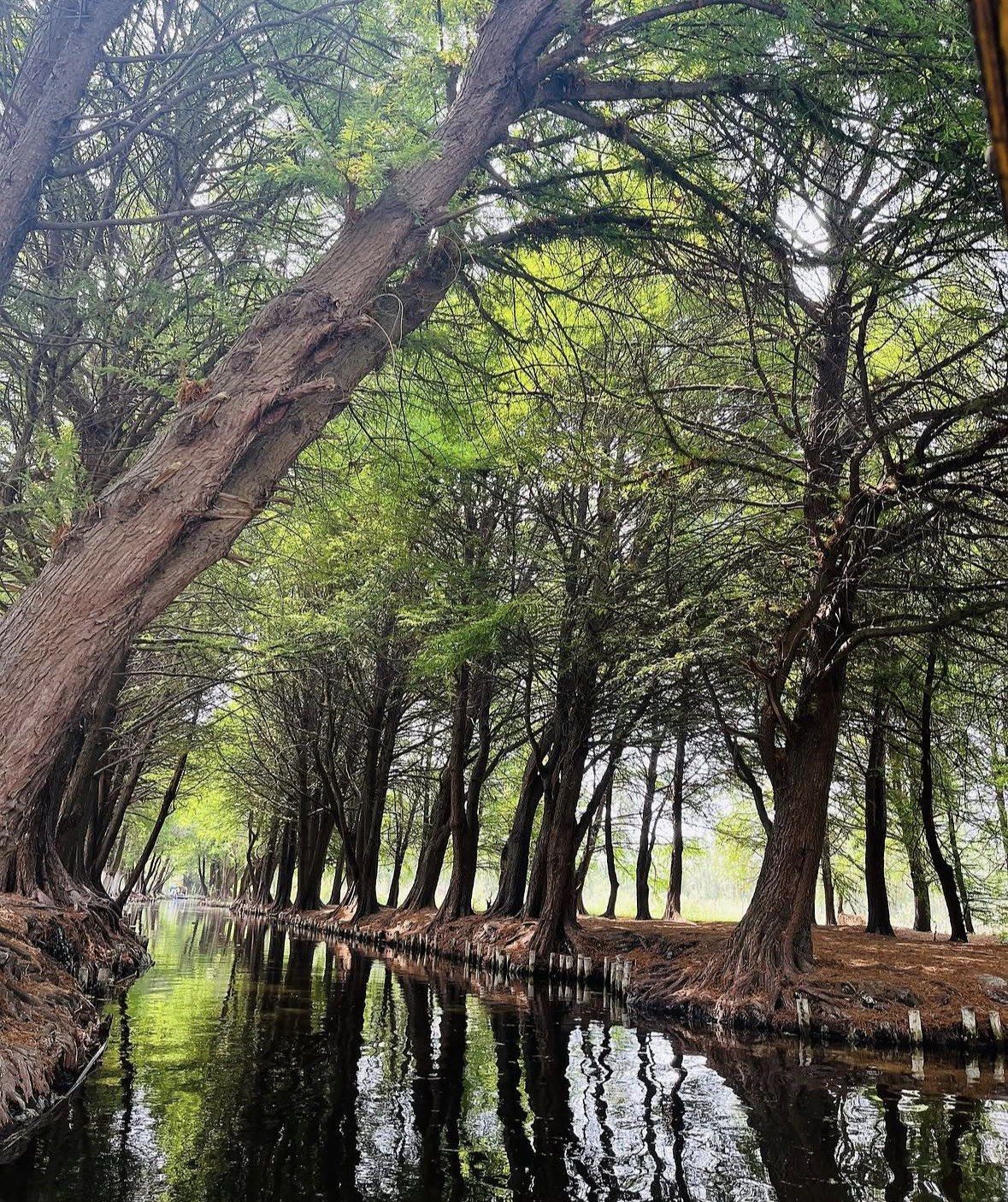
Daylight sets the working hours more than the dock timetables do. The channels carry no lighting, so boats generally work between about 8:00 and 17:00 even where a dock lists a later closing time. Routes differ by departure point too: Fernando Celada, Cuemanco and Puente de Urrutia run through the protected natural zone, where migratory and endemic birds of Xochimilco can be spotted, while Caltongo follows traditional rather than ecological routes. All ten authorised embarcaderos work every day of the year, and it is worth checking the hours of your departure point on the day, since not every dock publishes a timetable.
How many people fit on one boat
Eighteen passengers is the ceiling on a full-size trajinera, and the cap is applied strictly. Children under four count towards it like everyone else, so sixteen adults with three toddlers is two boats. Count the group honestly before you plan anything else.
Smaller boats carrying six to eight passengers also work the landings, charged on the same scale as the big trajineras rather than per head. For a couple or a family of four they make more sense than a table set for eighteen.
On a guided day the head count and the boat allocation sit with the operator. The three tours compared below all include a trajinera ride as part of the itinerary, so you arrive at the water with the boat already sorted.
The rules you agree to when you board
These are published canal regulations rather than one boatman's preferences, and they are enforced on the water. Reading them in advance is the difference between a long afternoon and a ride that ends early.
- Stay seated, with hands and feet inside the boat.
- Moving to another boat during the ride is not allowed, and jumping or walking across onto one is forbidden.
- Anyone who does not want to wear a life jacket signs a release letter with the operator or authorised staff.
- Alcohol on board is capped at one bottle of spirits per boat, or three beers per adult passenger.
- Bringing your own loud music equipment is prohibited: only the public-address systems and speakers provided by the operators are permitted.
- Toilets may be used only at authorised stops along the route.
- Rubbish stays on the boat until the operator indicates proper disposal.
- Visibly intoxicated passengers are reported to the tourism desk, and the operator can cut the ride short.
The boats that come alongside
Canal traffic is not all sightseeing. Mariachi groups and marimba players pull up beside you and play from their own boat, held against yours for the length of a song. Food boats cook and sell from the water, drinks boats come past, craft sellers hold up blankets and ceramics, and photographers offer to shoot the group with the painted arch in frame.
Every one of those is a separate business from the boat you are riding, settled with the vendor rather than included in the hire, and the borough publishes no rate for any of them. The operator's own speaker is the only sound system allowed aboard, which is why the music on most boats arrives from outside.
That is the case for an all-in day. On the private tour on this site, bottled water and a Mexican snack come with the boat ride; the small-group day includes a mariachi song, a music speaker on the trajinera and a Mexican churro. The food, the drinks and the music stop being open questions once you are on the water.
Tours with a trajinera, food and drinks included
All three tours below put you on a trajinera and handle the 28 km between central Mexico City and the canals, either with a hotel pick-up or from a central meeting point. They differ in how much comes with the boat and how much of the day sits in Coyoacán.
Pick the small-group day if you want the best-rated version with hotel pick-up and the canals plus Coyoacán on foot. Pick the 9-hour day if you want the longest itinerary at the lowest entry price and the option of lunch at a local restaurant. Pick the private tour if you want your own vehicle and a snack and water served during the boat ride.
| Tour | Duration | From | Rating | Food and drink with the ride | Transport |
|---|
| PREMIUM Frida Kahlo Museum and Xochimilco (Small Groups) | 6-7 hours | from $56 | 4.9 ★ (1352 reviews) | Mexican churro; mariachi song and speaker in Xochimilco | Private transportation, hotel pick-up and drop-off |
|---|
| Xochimilco, Coyoacan and Frida Kahlo with Optional Lunch | 9 hours | from $40 | 4.6 ★ (8447 reviews) | Lunch at a local restaurant if that option is selected; drinks not included | Transport from central meeting points |
|---|
| Private City Tour in Frida Kahlo, Coyoacan, and Xochimilco | 4-6 hours | from $195 | 4.8 ★ (702 reviews) | Bottled water and a Mexican snack during the boat ride | Air-conditioned vehicle, private group |
|---|
Questions people ask
Does a trajinera have a motor?
No. The boatman works the trajinera from the stern with a long pole, pushing and poling it along the channels. The flat bottom and shallow draught are what let it run between the chinampas, where the water is shallow and the channel often takes one boat at a time.
Where do the trajineras leave from?
From the authorised embarcaderos, the landing stages, and ten of them work 365 days a year. Nuevo Nativitas bases about 220 boats and Caltongo about 215, Fernando Celada around 140 and Belem around 130, while Salitre, opened in 1921, has about 51 and fewer crowds. Searching the specific embarcadero name in a map app matters, since plain Xochimilco lands you in the town centre.
Can small children ride on a trajinera?
Yes, but they occupy a place: the 18-passenger ceiling is strict and children under four are counted. Everyone stays seated with hands and feet inside the boat for the whole ride. The docks do not publish information on child life jackets or boarding assistance, so ask the operator before the day.
Can a trajinera reach the Isla de las Muñecas?
The Isla de las Muñecas is a canal-side chinampa reached by boat, and the borough describes it as worth the trip in itself. It is a long run rather than a detour on a short ride: ecological routes from Belem typically take four to five hours. If the island is the point of the trip, plan an early start: the dedicated island trip on this site leaves from Embarcadero Caltongo and takes 3.5 to 4 hours.
What can I bring on board?
Modest alcohol is allowed, within one bottle of spirits per boat or three beers per adult passenger, and your own loud music equipment is not permitted at all, since only the operators' speakers may be used. Rubbish stays on the boat until the operator points out where it goes, and toilets are used only at authorised stops.
Read also