In shortChinampas are rectangular farming plots built by hand in the shallow water of the Xochimilco lake, filled with lake mud and sediment and held in place by willows planted along their edges. The borough dates them to roughly the 14th to 16th centuries. They are part of the area's UNESCO recognition, they are still planted, and they have never floated.
14th-16th centurieswhen the plots were built
184 kmcanals between chinampas
2,657 hectaresprotected wetland
11 December 1987UNESCO inscription
How the plots were built in the shallow lake
A chinampa is a farming plot built by hand out in the water. A rectangle was staked into the shallow lake bed, walled with posts and woven branches, then filled with layers of lake mud, water weed and sediment until the surface sat clear of the waterline. Willows went in along the edges. Their roots bind the sides, and their trunks still mark the plot lines you pass from a boat.
The borough dates the work to roughly the 14th to 16th centuries, and the same ground is still planted. Some 184 km of navigable channels run between the plots, which gives the whole place its shape: narrow strips of soil with water on every side, and a channel wide enough for one flat-bottomed boat. Fourteen original villages sit along that water inside the protected area.
Chinampa farming is the reason for the heritage status. The inscription on the UNESCO World Heritage List carries the date 11 December 1987, under cultural criterion (v), shared with the historic centre of Mexico City as property ID 412. Around the plots, 2,657 hectares of the Xochimilco and San Gregorio Atlapulco lake system hold formal protection as a wetland, and conservation work there centres on the axolotl, the amphibian emblematic of Mexico City.
Why the Xochimilco floating gardens stay in place
The nickname comes from how the plots read from the water. Green rectangles sit almost at canal level, with no visible bank and nothing between the crop and the water but a line of willow trunks. From a passing boat the soil looks like it is lying on the surface.
A finished chinampa is fixed to the lake bed. The fill goes all the way down, posts and willow roots pin the sides, and the plot has stayed where it was made. Rafts of vegetation belong to the earliest stage of the technique, and that is where the image of drifting gardens began. The phrase "floating gardens of Mexico City" stuck anyway, and you will see it on signs and in tour names, so expect solid ground under the lettuce beds.
What the plots look like today
Working chinampas are easy to pick out: straight seed beds, plastic tunnel greenhouses, nurseries of ornamental plants in black bags, a shed, a pump, a canoe tied to the bank. Between them sit parcels nobody farms any more, gone over to willow scrub and reeds, and others built on with houses and small landings. Two neighbouring plots can look nothing alike.
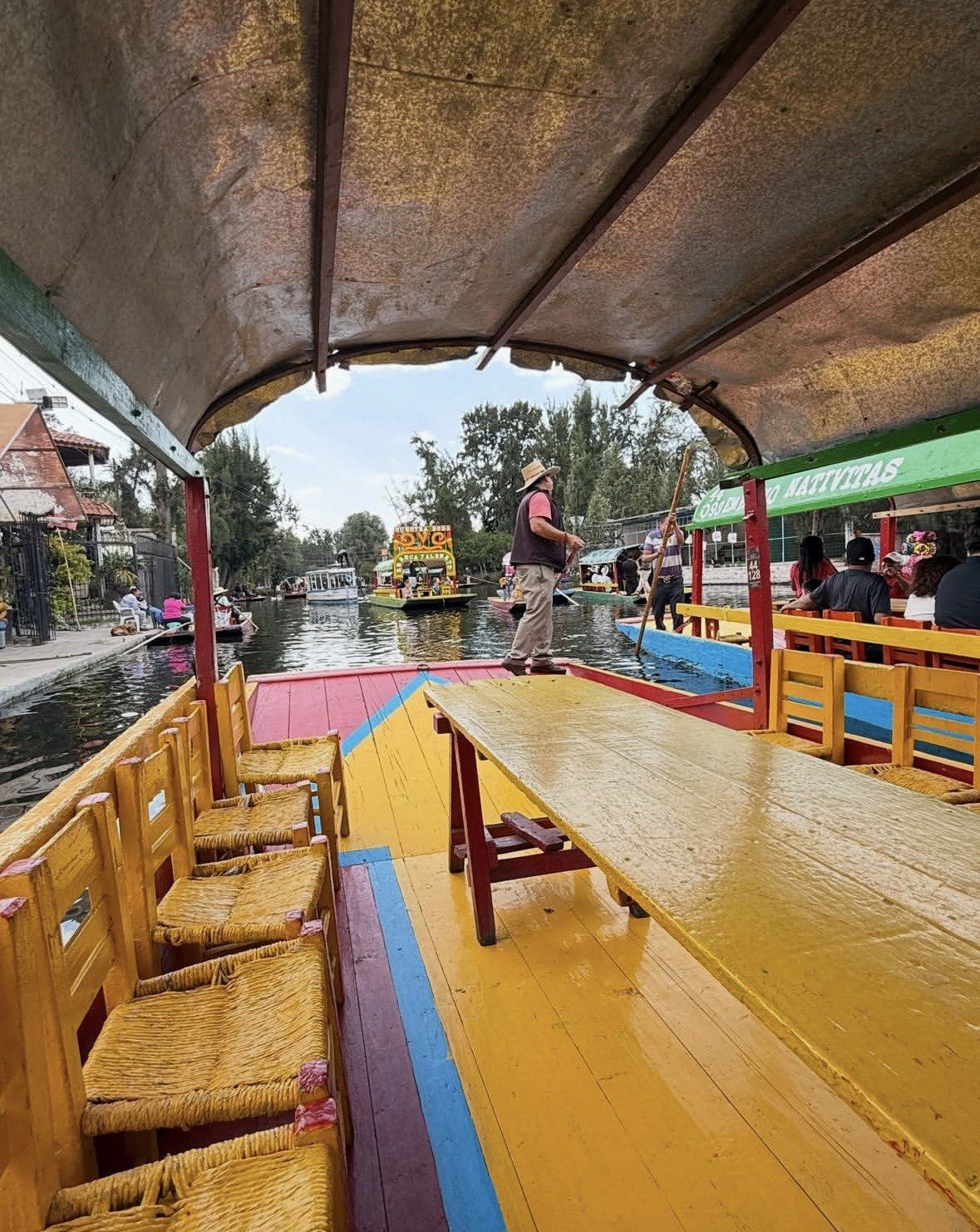
Canal traffic is just as uneven. Around the Nativitas embankment the water carries the painted trajineras, the food boats and the music: Nuevo Nativitas alone bases about 220 boats and Caltongo about 215, and on a Sunday afternoon you notice every one of them. Further into the protected natural zone the channels go quiet and work as farm roads made of water, with migratory and endemic birds along those routes.
On land there is a version with footpaths. The Parque Ecológico de Xochimilco keeps some 165 hectares of canals, chinampas and axolotl habitat at Periférico Oriente #1, Col. Ciénega Grande, across the road from the Cuemanco plant and flower market.
Onto a working chinampa
This 3.5-hour trip starts in the Xochimilco markets, takes a bicitaxi to the pier and includes a traditional chinampa and axolotl sanctuary, so you stand on the farmland instead of passing it.
★ 5.0/5 · 12 reviews
Which docks and routes pass farmed chinampas
Routes through the protected natural zone leave from Fernando Celada, Cuemanco and Puente de Urrutia, according to the official borough site, and those are the channels where the farming and the birds are the point. Ecological trips from Belem usually run four to five hours and take in the Xaltocán and Caltongo lagoons. The Isla de las Muñecas, the canal-side chinampa everyone asks about, is itself a plot reached only by boat, and the borough describes the trip out there as rewarding in its own right.
The Nativitas cluster, Zacapa and Las Flores Nativitas are the traditional landings, with the large facilities, parking, craft markets and restaurants. All ten authorised embarcaderos operate 365 days a year, and since the canals have no lighting, boats generally work between about 8:00 and 17:00 even where a dock stays open later. Not every landing publishes a timetable, so check on the day.
| Embarcadero | Route type | What the official facts note |
|---|
| Fernando Celada | Protected natural zone | About 140 boats; Monday to Friday 8 a.m. to 6 p.m., Saturday and Sunday 8 a.m. to 10 p.m.; about ten minutes on foot from the Xochimilco or Francisco Goitia light rail stations |
|---|
| Cuemanco | Protected natural zone | Migratory and endemic birds along the ecological route; the plant and flower market and the ecological park stand nearby |
|---|
| Puente de Urrutia | Protected natural zone | Listed by the borough among the protected-zone launches; no hours published on the city portal |
|---|
| Belem | Ecological route | About 130 boats; ecological trips typically four to five hours, usually covering the Xaltocán and Caltongo lagoons |
|---|
| Nuevo Nativitas | Traditional | Opened 1970, about 220 boats, daily 6:00 to 22:00, with parking, a large crafts market and small restaurants |
|---|
| Caltongo | Traditional | About 215 boats, 9 a.m. to 10 p.m. all year, traditional rather than ecological routes |
|---|
| Salitre | Traditional, smallest | Opened 1921, about 51 boats and fewer crowds |
|---|
Chinampa produce in the borough's kitchens
What comes off the plots is still eaten locally. The Mercado de Xochimilco on Av. Nuevo León is the regional distribution centre for the borough's farming area, trades daily from 8:00 to 20:00 across two buildings with roughly 450 vendors, and the city recommends it for comida corrida, the set-price midday meal. Nursery stock raised on the chinampas ends up at the Cuemanco plant and flower market, where about 600 traders work from 8:00 to 16:00 every day; the inventory tells you what the plots grow when they are not growing food, from cacti and fruit trees to bonsai, tulips, violets and medicinal herbs. Nearest to the main landings is the Madreselva market inside the Bosque de Nativitas, 0.28 km from Embarcadero Nuevo Nativitas.
Flowers show how much of the farming survives. Marigold production in Mexico City reached almost 10 million plants in 2026 from 596 producers, against just over a million in 2019, and the growing villages in the chinampa belt are San Luis Tlaxialtemalco, San Gregorio Atlapulco, Santiago Tepalcatlalpan and Santiago Tulyehualco. Go in late October and you can see the ridges of colour from the water.
Choosing between a canal ride and a chinampa food trip
Pick by what you want to look at. If the painted boats, the music and a half day that also covers Coyoacán are the reason you came, take the canal ride and treat the chinampas as scenery you now understand. If the farming is what draws you, choose a trip that gets you off the boat and onto a plot, because from the channels you see the willow edges and not the beds behind them.
Timing follows the water. Boats generally run from about 8:00 to 17:00, so a morning start leaves room for the market afterwards. Dawn departures exist because the canals are empty and the birds active at first light.
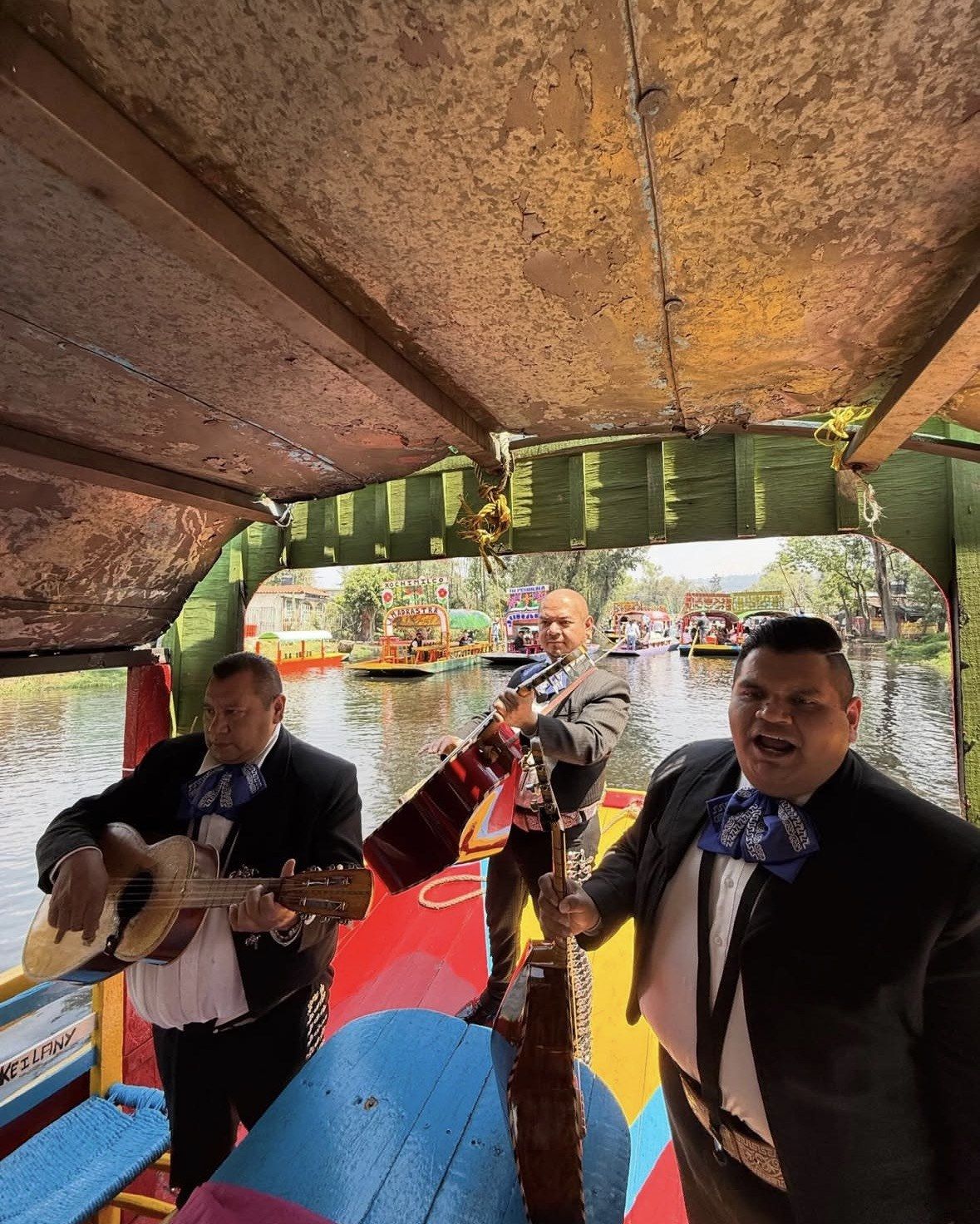
- The plots seen from the water, with Coyoacán in the same day: PREMIUM Frida Kahlo Museum and Xochimilco (Small Groups), 6-7 hours, from $56, 4.9 ★ (1352 reviews). A certified tour guide takes a small group by private vehicle with hotel pick-up and drop-off, on foot through Coyoacán and then out between the chinampas by trajinera, with a music speaker on the trajinera, a mariachi song and a Mexican churro along the way; Frida Kahlo Museum entrance applies when that option is selected, and gratuities are not included.
- The farming at close range, starting in the stalls that sell it: Guacamole a Tasty Adventure Through Xochimilco Markets and Canals, 3.5 hours, from 1,900 pesos, 5.0 ★ (12 reviews). It opens with coffee or tea and sweet bread or a tamal in the markets, moves down to the pier by bicitaxi, and puts a traditional chinampa and an axolotl sanctuary on the route, with the ingredients for a taco placero and hibiscus flower water handed round on the boat.
- First light under your own paddle: Sunrise Kayak Tour in Xochimilco, 5 hours, from 480 pesos, 4.6 ★ (95 reviews), with kayak, vest and individual paddle plus traveller insurance, and breakfast and round-trip transport in an air-conditioned vehicle as selectable options; the meeting point is in front of the yellow church, staff in blue and pink vests.
Questions people ask
Can you walk on a chinampa, or only see them from the boat?
The plots are private working farmland, so a standard canal ride shows you their willow-lined edges from the water. You get onto one on trips that include a chinampa visit in the itinerary. The markets and canals food trip on this site includes a traditional chinampa and an axolotl sanctuary, and a chinampa landing is also what the ecological zone routes are built around.
How old are the chinampas, and why are they protected?
The borough dates the hand-built plots to roughly the 14th to 16th centuries. That farming system is the basis of the cultural inscription on the UNESCO World Heritage List dated 11 December 1987, under criterion (v) and shared with Mexico City's historic centre as property ID 412. The surrounding lake system of 2,657 hectares also holds formal status as a protected wetland.
Are axolotls found where the chinampas are farmed?
Conservation work in the protected area centres on the axolotl, the amphibian emblematic of Mexico City, and the Parque Ecológico de Xochimilco protects canals, chinampas and axolotl habitat across some 165 hectares at Periférico Oriente #1. Seeing one in open water is unlikely. Sanctuary visits come as part of specific trips rather than on a general canal ride.
Is the Isla de las Muñecas a chinampa?
Yes. The Island of the Dolls is a canal-side chinampa reached only by boat, and the borough's own tourism pages recommend the trip. It sits well away from the main landings, so it suits the longer routes rather than a short ride. Count the hours before you commit, since the canals have no lighting.
Which canals are quiet and which are busy?
The busiest water runs around the Nativitas embankment and Caltongo, where the largest fleets are based: about 220 boats work from Nuevo Nativitas and about 215 from Caltongo. The channels through the protected natural zone, served from Fernando Celada, Cuemanco and Puente de Urrutia, carry farm traffic and birdlife instead of music boats. A weekday morning makes either option calmer.
Read also